Most infantry fighting vehicles in service today began life in a different era. The Bradley was designed in the 1970s. The CV90 entered service in the 1990s. The Puma, Germany’s most recent homegrown IFV, took nearly two decades to develop and arrived over budget.
Rheinmetall built the Lynx to break that pattern. Developed as a privately funded, clean-sheet design rather than an upgrade of a legacy platform, it was conceived from the outset for the threats, technologies, and operational demands of the 21st century: modular armor, digital networking, drone integration, and a family of variants on a single hull.
The result is one of the most commercially successful new-generation infantry fighting vehicles on the market, with contracts secured in Hungary, Romania, Italy, and Ukraine before it has seen a single day of combat.
This guide explores how the Lynx was developed, how it works, where it has been adopted, and what challenges and opportunities may shape its future.
At a Glance
| Category: | Details: |
| Type | Infantry fighting vehicle |
| Role | Armored troop transport and mechanized infantry support |
| Manufacturer | Rheinmetall |
| Crew | 3 (commander, gunner, driver) |
| Troop Capacity | 8 |
| Length | 7.84 meters (25.7 feet) |
| Width | 3.78 meters (12.4 feet) |
| Weight | Up to 50 tons |
| Height | 3.3 meters (10.8 feet) |
| Payload | 7 tons (free payload) |
| Maximum Road Speed | 70 kilometers (44 miles) per hour |
| Engine Type | 6-cylinder in-line engine |
| Active Protection Systems | Softkill (such as ROSY) and hardkill (such as StrikeShield) systems |
| Armament | Main: 30 mm or 35 mm autocannon (depending on turret configuration) Secondary: Coaxial machine gun and anti-tank guided missiles (optional) |
What Is the Lynx IFV?
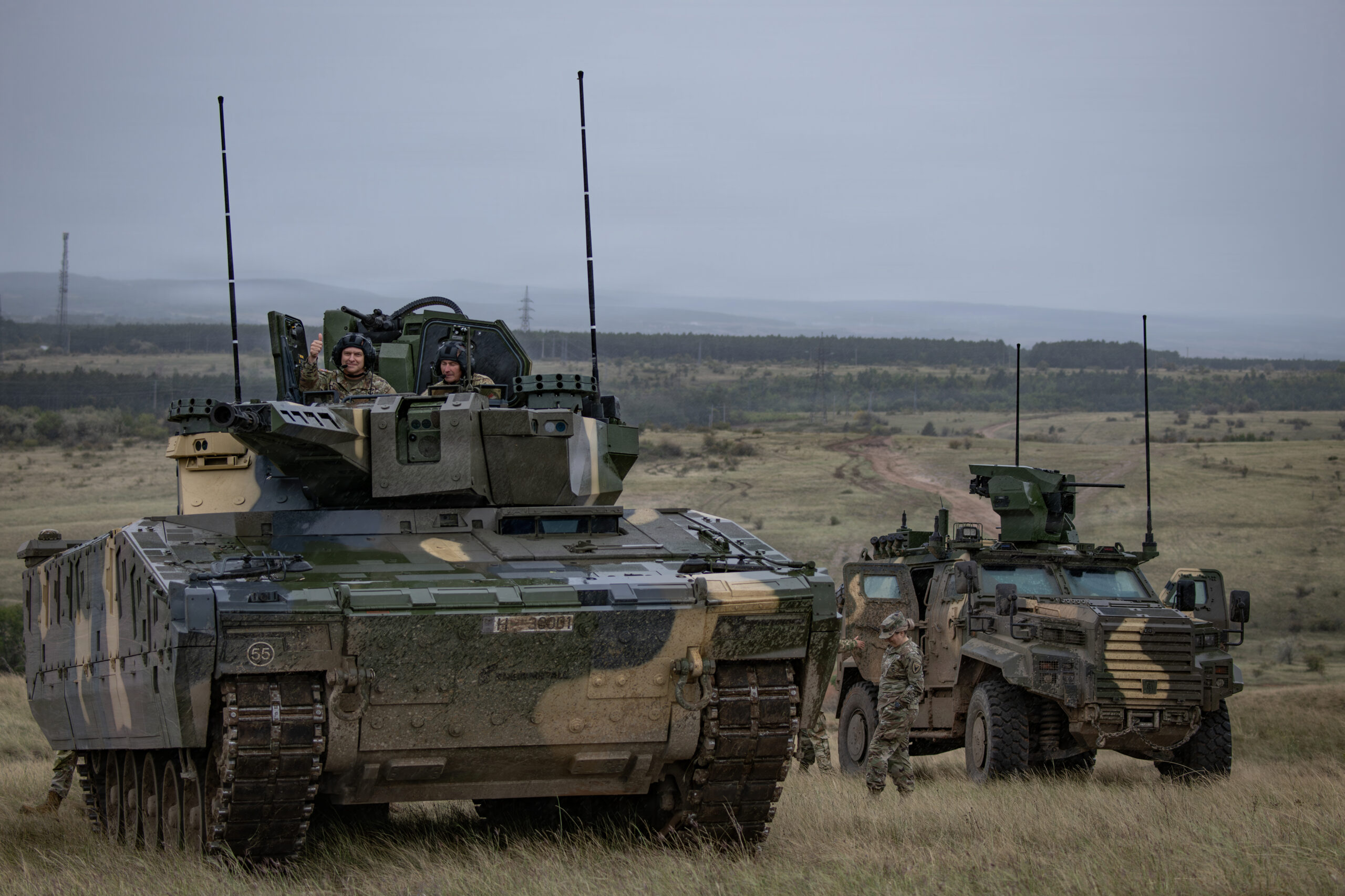
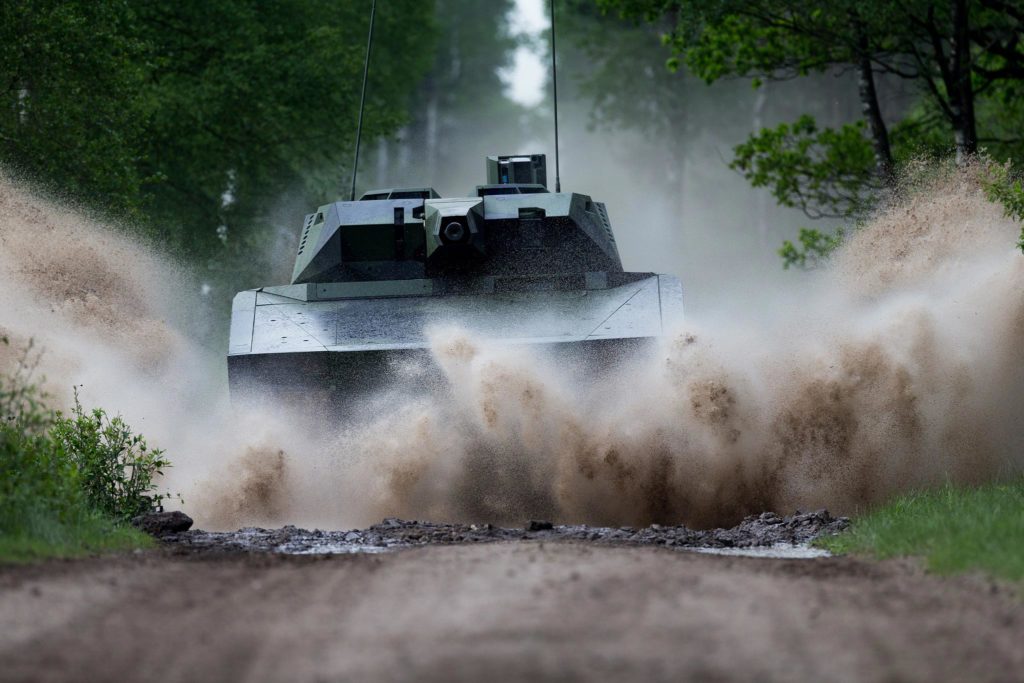
The Lynx represents Rheinmetall’s vision for the modern infantry fighting vehicle (IFV), pairing mechanized troop transport with the firepower, protection, and digital capabilities needed for contemporary warfare.
Unlike many older IFVs, the Lynx was designed from the outset to accommodate modern demands for networked warfare, scalable protection, and future upgrades.
As a result, the vehicle can operate alongside tanks and other armored formations, carrying infantry directly into contested environments while allowing soldiers to dismount and continue the fight under armored support.
Origins of the Lynx Infantry Fighting Vehicle
Rheinmetall began developing the Lynx as a privately funded program to replace aging infantry fighting vehicles across Europe and other international markets as growing global threats continued to emerge.
The lighter Lynx KF31 made its public debut at the Eurosatory defense exhibition in June 2016, while the heavy and loaded KF41 variant was unveiled two years later at the same show.
A major breakthrough came in 2020 when Hungary selected the Lynx KF41 as part of a broad military modernization program. The agreement included vehicle deliveries and plans for local production, marking the platform’s first significant export contract.
Vehicle Variants and Configurations
KF31
Known as the original Lynx configuration, the KF31 was designed as a lighter and more compact infantry fighting vehicle. It accommodates a smaller infantry section while introducing the platform’s modular design philosophy.
KF41
The larger KF41 is the most widely adopted version and serves as the family’s flagship model. It offers increased troop capacity, greater payload potential, and additional growth margin for future technologies.
Mission-Specific Variants
IFV configurations can be equipped with manned or unmanned medium-caliber turrets such as the Lance 2, UT30, and Hitfist.
Rheinmetall has also proposed the Lynx 120 Heavy Fire Support Vehicle, armed with the Hitfact turret to provide direct-fire support comparable to that of a light tank.
Other planned and demonstrated variants include a command vehicle for battlefield coordination, a reconnaissance vehicle for intelligence gathering, a joint fire support platform for target acquisition and strike coordination, an armored ambulance, and a recovery vehicle.
The family has also expanded into specialized roles such as air defense through integration of the Skyranger 30 turret and indirect-fire support through a 120mm NEMO mortar carrier, underscoring the platform’s adaptability across a wide range of missions.
How Does the Lynx Work?
Key Features
Modular Architecture and Mission Configurability
The Lynx infantry fighting vehicle was designed around a highly modular architecture that allows the platform to be adapted for a wide range of missions.
Beyond the standard configuration, the vehicle can be configured for reconnaissance, command and control, fire support, air defense, medical evacuation, recovery, and other specialized roles.
Its open digital architecture also facilitates the integration of future sensors, weapons, and battlefield technologies as operational requirements evolve.
Large Protected Troop Compartment
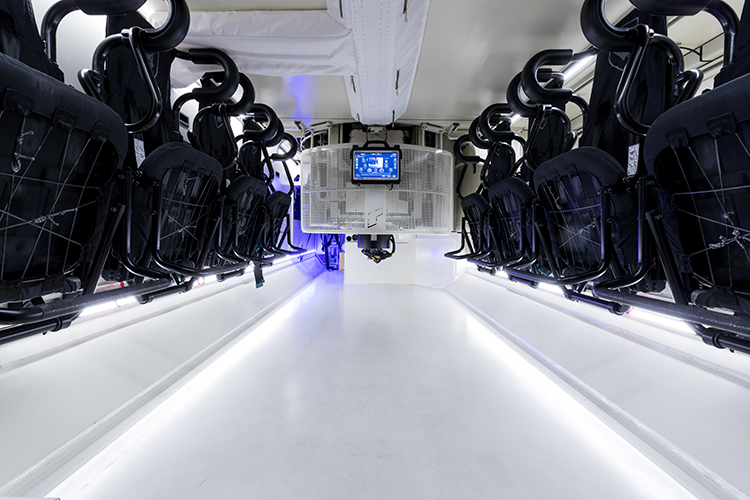
One of the Lynx’s distinguishing characteristics is its spacious, protected interior. The vehicle provides approximately 6.43 cubic meters (227 cubic feet) of crew compartment volume, allowing it to accommodate crew and dismounted soldiers while maintaining a high level of protection.
The design prioritizes both troop-carrying capacity and crew survivability in demanding combat environments.
Digital Systems and Network Integration
Unlike many older IFVs that were later upgraded with digital technologies, the Lynx was designed from the outset for networked operations.
Its digital backbone supports advanced communications, battlefield management systems, sensors, and future autonomous capabilities, enabling crews to share information and maintain situational awareness across the battlefield.
Protection and Survivability
The Lynx incorporates modular armor, mine and blast protection, and provisions for active protection systems to counter modern battlefield threats. Its scalable protection concept allows operators to tailor survivability levels to mission requirements while preserving mobility and growth potential.
Strengths
- Reduced long-term ownership burden: The Lynx can simplify training, maintenance, spare parts management, and sustainment planning by consolidating multiple mission roles onto a common platform.
- Adaptability to evolving threats: The Lynx’ design allows operators to incorporate new technologies, protection systems, and mission equipment over time, helping the platform remain relevant as battlefield requirements change.
- Enhanced mechanized infantry effectiveness: The vehicle enables infantry units to arrive at the fight with greater combat power and survivability. This supports sustained operations alongside tanks and other armored formations in high-threat environments.
Limitations
- Limited operational track record: Compared with established platforms such as the Bradley, CV90, or Puma, the Lynx remains relatively new to military service. It has less operational data from large-scale deployments and high-intensity combat environments, leaving some aspects of its long-term performance unproven.
- Higher acquisition costs: The Lynx was designed to meet modern requirements for protection, networking, and future growth, but these capabilities can increase procurement costs. For some operators, budget constraints may limit fleet size or make lower-cost alternatives more attractive.
- Potential weight growth and mobility tradeoffs: The platform’s modular design allows for additional armor, mission equipment, and new technologies, but each addition can increase overall vehicle weight.
Where Has the Lynx Been Used?
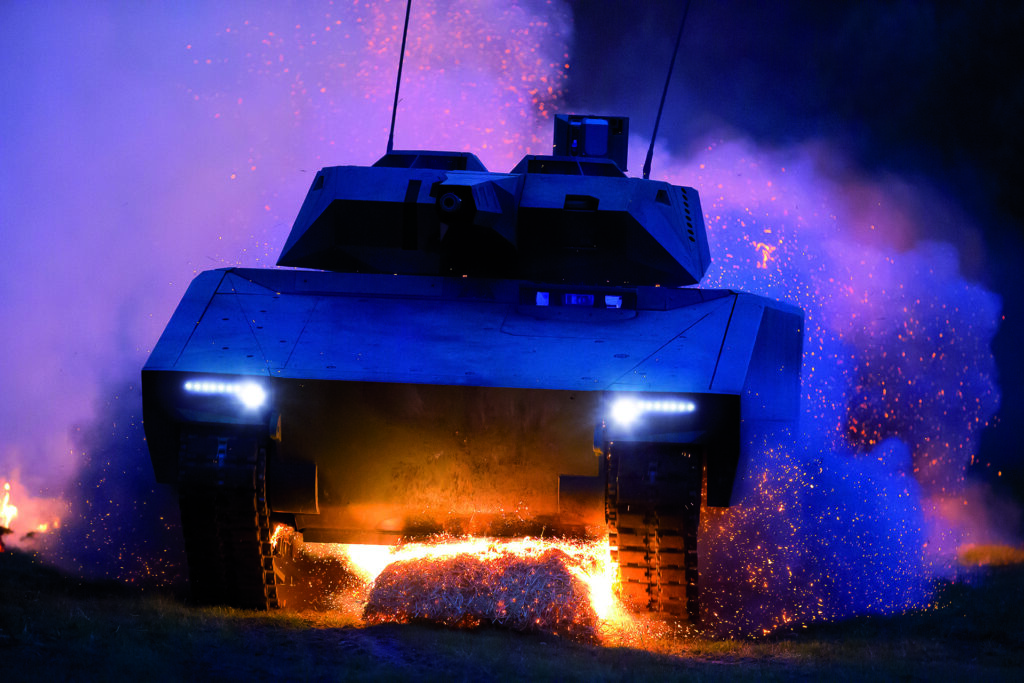
Although the Lynx has yet to build the extensive combat record of older infantry fighting vehicles, it has emerged as one of the most successful new-generation IFVs on the export market.
- Hungary: Hungary became the launch customer for the Lynx KF41, ordering more than 200 vehicles as part of a broader military modernization effort. The program also established local production in Zalaegerszeg, making Hungary both the first operator and a key industrial partner.
- Romania: Romania selected the Lynx to support the modernization of its mechanized forces, further expanding the platform’s presence along NATO’s eastern flank and reinforcing Rheinmetall’s position in the European armored vehicle market.
- Italy: In 2024, Italy selected the Lynx as the basis for its future infantry fighting vehicle program through a partnership between Rheinmetall and Leonardo. It has since received Lynx units to mark the official launch of its Army Armored Combat Systems program.
- Ukraine: Rheinmetall has proposed the Lynx for Ukraine‘s future armored vehicle requirements and has discussed potential local production and industrial cooperation. Ukraine signed its first Lynx KF41 contract in December 2025, with deliveries of an initial batch scheduled to begin in 2026.
- Australia: The Lynx KF41 was a finalist in Australia’s Project Land 400 Phase 3 competition but lost to Hanwha’s Redback in July 2023, with Canberra selecting 129 Redback vehicles in a program valued at up to 7 billion Australian dollars — the most significant competitive defeat for the platform to date.
Future Outlook
The Lynx was designed with growth in mind. Rheinmetall continues to expand the family with reconnaissance, mortar, air defense, and other specialized variants.
New developments, including counter-drone capabilities and enhanced battlefield networking, suggest the platform will continue evolving alongside emerging threats.
As militaries place greater emphasis on survivability, digital integration, and modularity, the Lynx appears well-positioned to become one of the defining infantry fighting vehicles of the next generation.