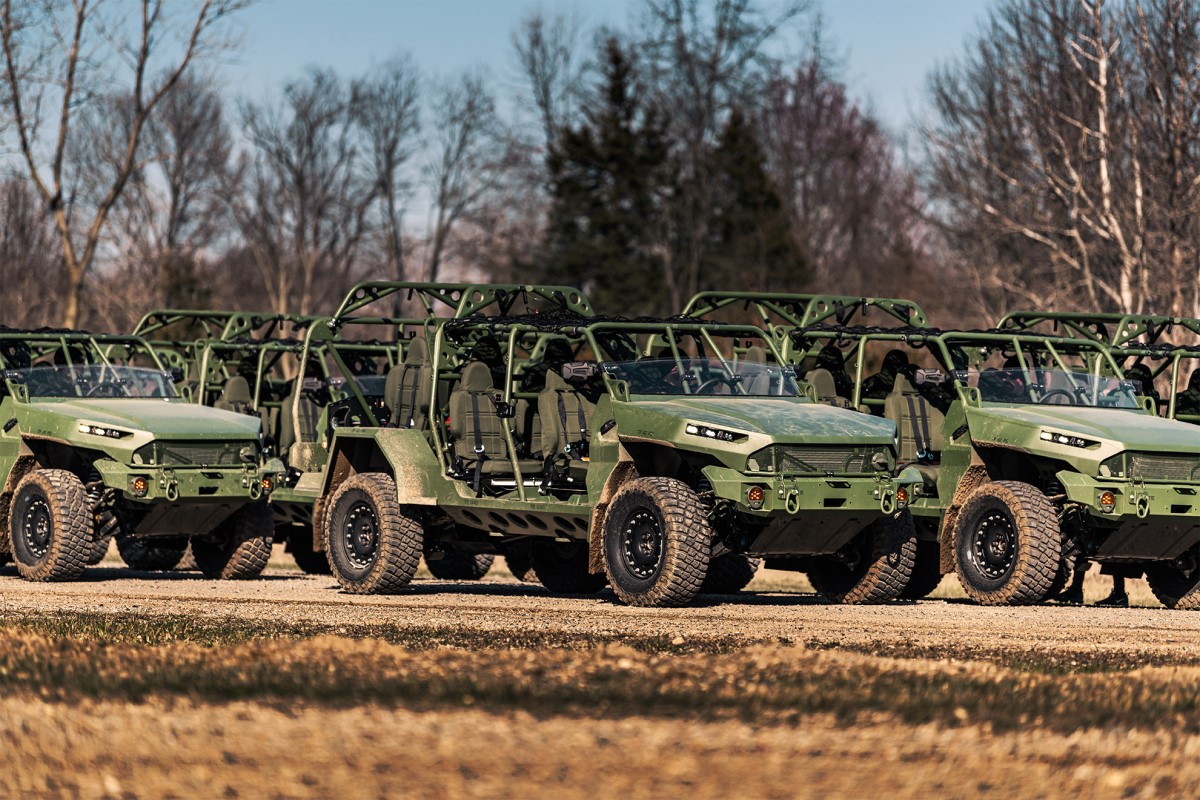

The US Army has selected GM Defense, Ford Motor Company, and BC Customs to build nine prototypes for its next-generation Infantry Squad Vehicle-Heavy (ISV-H), advancing efforts to field a tactical vehicle that combines troop transport with mobile battlefield power.
Washington awarded prototype agreements to the three companies in late June, The Wall Street Journal reported, with each to ship three vehicles by March 2027.
Once delivered, the platforms will be utilized for operational assessments and limited developmental testing by the Army Test and Evaluation Command, an insider told Breaking Defense.
While the military did not disclose the total investment for the initiative, it revealed a target acquisition for up to 606 vehicles and has requested $21 million in its fiscal 2027 budget to purchase the first 34, according to a solicitation published in March.
“This competitive prototyping effort directly advances Army Senior Leader directives to enhance lethality and operational flexibility on the modern battlefield,” an army spokesperson said.
ISV-H Bids
GM Defense previously revealed it is offering a hybrid-electric variant based on the Chevrolet Silverado HD, building on its existing Infantry Squad Vehicle program, which uses the Chevrolet Colorado design.
Meanwhile, Ford will assemble its pitch based on its flagship F-Series Super Duty pickup.
BC Customs said it received a $3.3-million other transaction agreement to produce its three prototypes but declined to provide details about its bid.
Key Features
The US Army specified that the ISV-H must be able to carry six passengers while supplying onboard and exportable power for command posts, unmanned systems, and other battlefield equipment, which the officials have identified as a critical requirement for the effort.
The vehicle is expected to have a payload capacity of 4,000 pounds (1,814 kilograms), a towing limit of 11,500 pounds (5,216 kilograms), and transportability aboard existing strategic military airlifters.
On the road, the system must have speeds over 65 miles (105 kilometers) per hour and a range of more than 250 miles (402 kilometers).