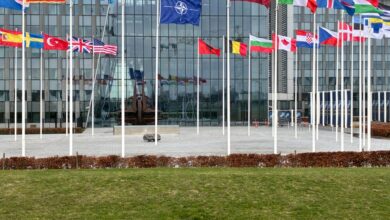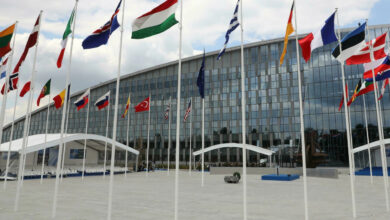
Here I sit in a Turkish prison, just a few hours’ drive from the Presidential Complex, where Recep Tayyip Erdoğan hosted NATO leaders this month.
My decade of incarceration directly challenges the values and tenets of the world’s largest and most powerful military alliance established to uphold the principles of freedom and democracy.
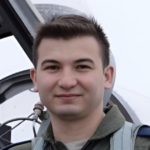
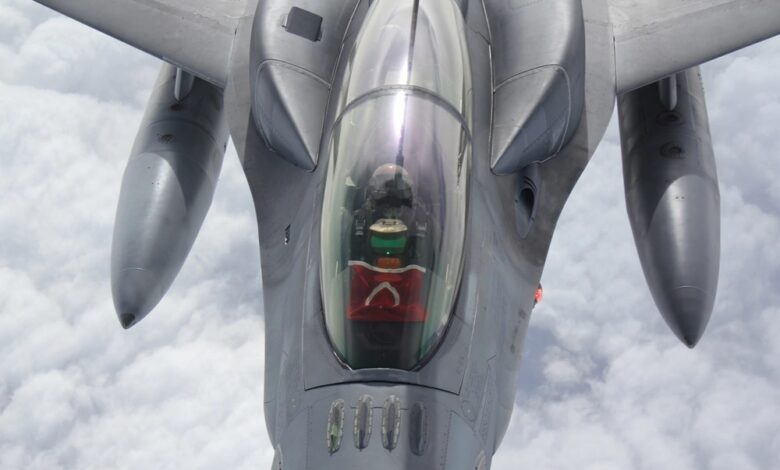
I was the most promising Turkish pilot in my generation. I trained at Laughlin Air Force Base in Texas, graduated first in my class, was a rising officer in the Turkish air force, and was predicted by some to become “the first Turk in space.”
My story was widely covered in both Turkish and international media, with headlines describing me as “NATO’s Golden Boy Lieutenant.”
On July 15, 2016, I had the misfortune of being at Akıncı Air Base outside Ankara under official military orders, while acting within the chain of command, when an apparent coup attempt began to unfold against Erdoğan.
I had originally planned to take a train that day to visit my girlfriend, who lived in another city. I had even bought my ticket in advance. But my duty to obey my commanding officer’s orders changed my life forever. People died that night. I was one of many junior officers mobilized under orders, with no knowledge of what was unfolding.
I know that I had no authority to plan operations, issue orders, or make strategic decisions. I did not participate in violence, carry out unlawful actions, or knowingly support any attempt to overthrow the government.
By the next month, though, I was swept up in a purge that treated my presence at the air base as evidence. It was collective punishment without any individual due process.
I was not alone. Just within the Turkish Air Force, 274 pilots were discharged in the months after the coup, a number comparable to the entire annual production of fighter pilots in the US Air Force.
Across the armed forces, more than 10,000 of the roughly 32,000 officers serving on July 15, 2016, were eventually expelled. Most, like me, were never shown evidence of wrongdoing.
Many of us trained on NATO soil, alongside NATO militaries, to serve NATO’s collective defense. We were not only imprisoned but also discarded as assets of this country, people whose training and development had been supported by our allies.
In the 10 years since, the government has not released any kind of neutral report about the coup attempt, preferring baseless oppression against its perceived opponents.
And here I am, still living in a prison cell.
Throughout the investigations, trials, and appeals, no witness testimony, digital evidence, or institutional inquiry has established that I belonged to a criminal organization or knowingly participated in any illegal act.
Multiple official reviews found no evidence linking me to wrongdoing. My defense has consistently been simple: I followed orders within a military hierarchy without knowledge of any unlawful intent, as countless trainees and lower-ranking personnel did that night.
Nevertheless, I was prosecuted in a massive trial involving hundreds of defendants. In such proceedings, individual circumstances often disappeared behind broad assumptions. For many young cadets, trainees, and junior officers, the principle of individual criminal responsibility, the cornerstone of any just legal system, was overshadowed by collective punishment.
And that’s just some of the hundreds of thousands of innocent people who have been prosecuted for guilt-by-association.
Some of us have spent our entire adulthoods in prison. Others lost careers, families, and futures.
Prison leaves a person with very little. Material possessions lose their value. Time becomes heavy. Your greatest assets become a pen, your thoughts, and your hope.
During these years, I refused to surrender to despair. I continued studying. I pursued a legal education. I devoted myself to understanding the very principles of justice that I believe were denied to me. Even while imprisoned, I tried to prepare myself for a future in which truth would eventually matter again.
Being imprisoned is difficult. Being forgotten is even harder.
So, while NATO leaders sat down nearby to discuss collective defense and shared values, they missed an opportunity to urge the Turkish leaders to address these unresolved cases.
I am not asking NATO leaders or anyone else to take my word for it. I am asking for an independent review of the evidence in cases like mine, conducted by impartial legal experts. If national courts have nothing to hide, an independent review costs them nothing.
It’s the least that any credible NATO ally should demand.
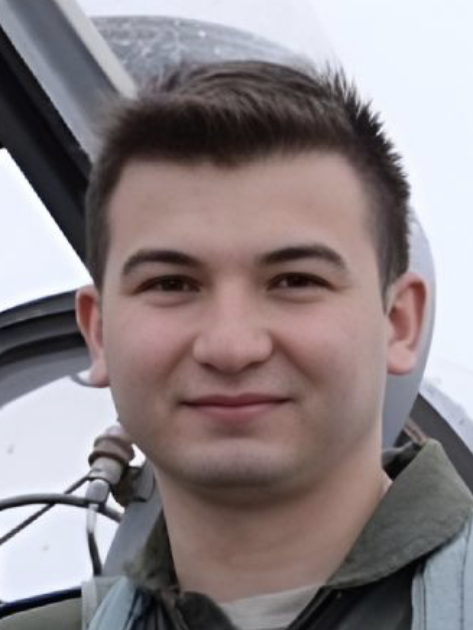
Buğra Baldan is a former Turkish Air Force pilot currently serving a life sentence in a maximum-security prison in Turkey.
The views and opinions expressed here are those of the author and do not necessarily reflect the editorial position of The Defense Post.
The Defense Post aims to publish a wide range of high-quality opinion and analysis from a diverse array of people – do you want to send us yours? Click here to submit an op-ed.