
Voyager Technologies has received a $16.5-million contract from DARPA to continue development of technology that gives greater control over solid rocket motor performance after manufacture.
The award supports Phase 2 of DARPA’s Burn n’ Go program, an effort aimed at developing solid rocket motors (SRMs) with adjustable thrust characteristics.
Conventional SRMs are valued for their simplicity and reliability but typically produce a fixed thrust profile once manufactured, limiting their flexibility for different mission requirements.
“This award reflects confidence in our ability to translate advanced propulsion technologies into field-ready capabilities that support US national readiness and deterrence,” said Matt Magaña, president of Space, Defense & National Security at Voyager.
“Our approach is designed not only to demonstrate performance gains at the system level, but to establish a credible path to industrialization that can reshape how solid rocket motors are produced, mission tailored and controlled,” he added.
Building on Initial Design Work
The contract follows the completion of the program’s first phase, during which Voyager developed a conceptual architecture for the system and conducted trade studies and preliminary designs to assess the feasibility of the technology.
Phase 1 concluded with a conceptual design review that validated the proposed approach and cleared the program to move into hardware development and testing.
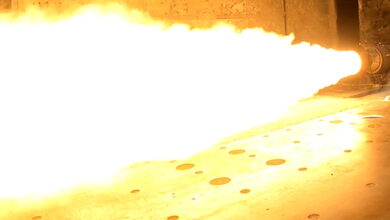
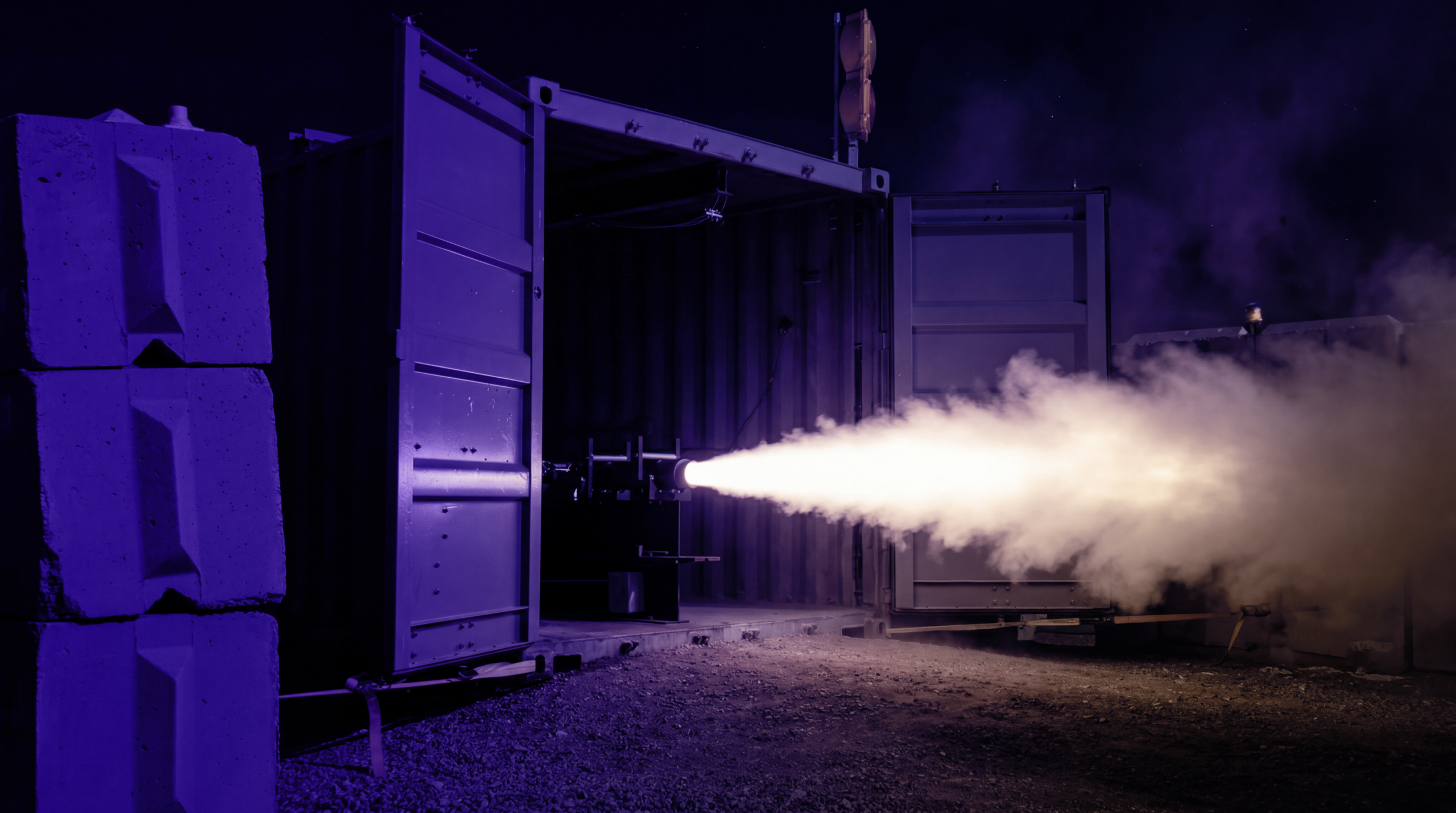
Over the next 20 months, Voyager and its partners will work on developing and validating proof-of-concept systems. The effort is expected to culminate in hot-fire demonstrations of SRMs equipped with the new control technology.
The program will also focus on manufacturing methods intended to support larger-scale production and the integration of structural health-monitoring systems capable of tracking motor condition and performance in real time.
DARPA launched the Burn n’ Go initiative as part of broader efforts to improve the flexibility, affordability, and production capacity of US missile propulsion systems.
The program seeks to enable propulsion technologies that can be adapted to different operational requirements without requiring entirely new motor designs.
Solid rocket motors are used in a wide range of military systems, including missiles, interceptors, and launch vehicles.
As the Pentagon seeks to expand munitions production and replenish stockpiles, improving manufacturing efficiency and adaptability has become a growing focus for both government and industry.