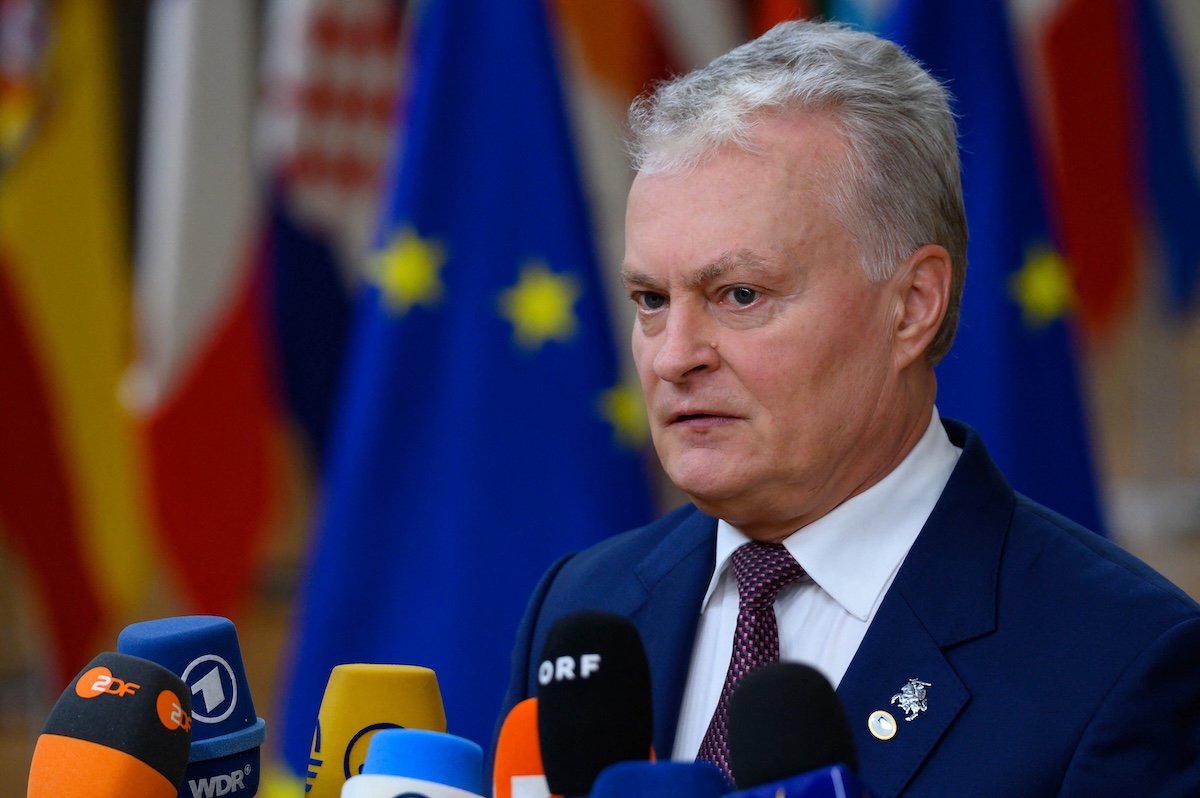
Lithuania will deploy military personnel for one month to reinforce security at key infrastructure, as President Gitanas Nausėda warned that the country’s transport and energy facilities could become targets of Russian sabotage, local news reported.
Defense Minister Robertas Kaunas signed an order authorizing the Lithuanian Armed Forces to support the Public Security Service, which is responsible for protecting critical infrastructure.
Up to 30 troops, supported by transport assets and a naval vessel or boat with its crew, will take part in the deployment.
Military personnel will coordinate security operations and specific tasks with the Public Security Service throughout the mission.
Protection measures will cover several strategic energy facilities across the Baltic nation.
These include the liquefied natural gas terminal in the port city of Klaipėda in western Lithuania, the LitPol Link electricity interconnection with Poland, and a nearby transformer substation in Alytus, in the south of the country near the Polish border.
Military personnel will also help protect the Kruonis pumped-storage hydropower plant, located near Kaunas in central Lithuania.
Growing Security Concerns
The deployment comes as Lithuania and other NATO countries on the alliance’s eastern flank warn of a growing risk of Moscow provocations.
Bordering both Russia’s Kaliningrad exclave and Moscow’s ally Belarus, Vilnius has steadily strengthened its defense posture since Russia’s full-scale invasion of Ukraine.
Lithuanian officials argue that the Kremlin could seek to compensate for battlefield setbacks through disruptive actions beyond the front line.
As part of broader regional deterrence, the country hosts NATO forces, and Presidential National Security Adviser Deividas Matulionis said additional allied troops would be deployed to Lithuania if the regional security situation deteriorated.
Since the beginning of this year, the Baltic country has allocated more than 5 percent of its GDP to defense, one of the highest levels among NATO members.
Earlier this month, the government also proposed removing the constitutional ban on the deployment of nuclear weapons, saying the country should become an integral part of Western nuclear deterrence.