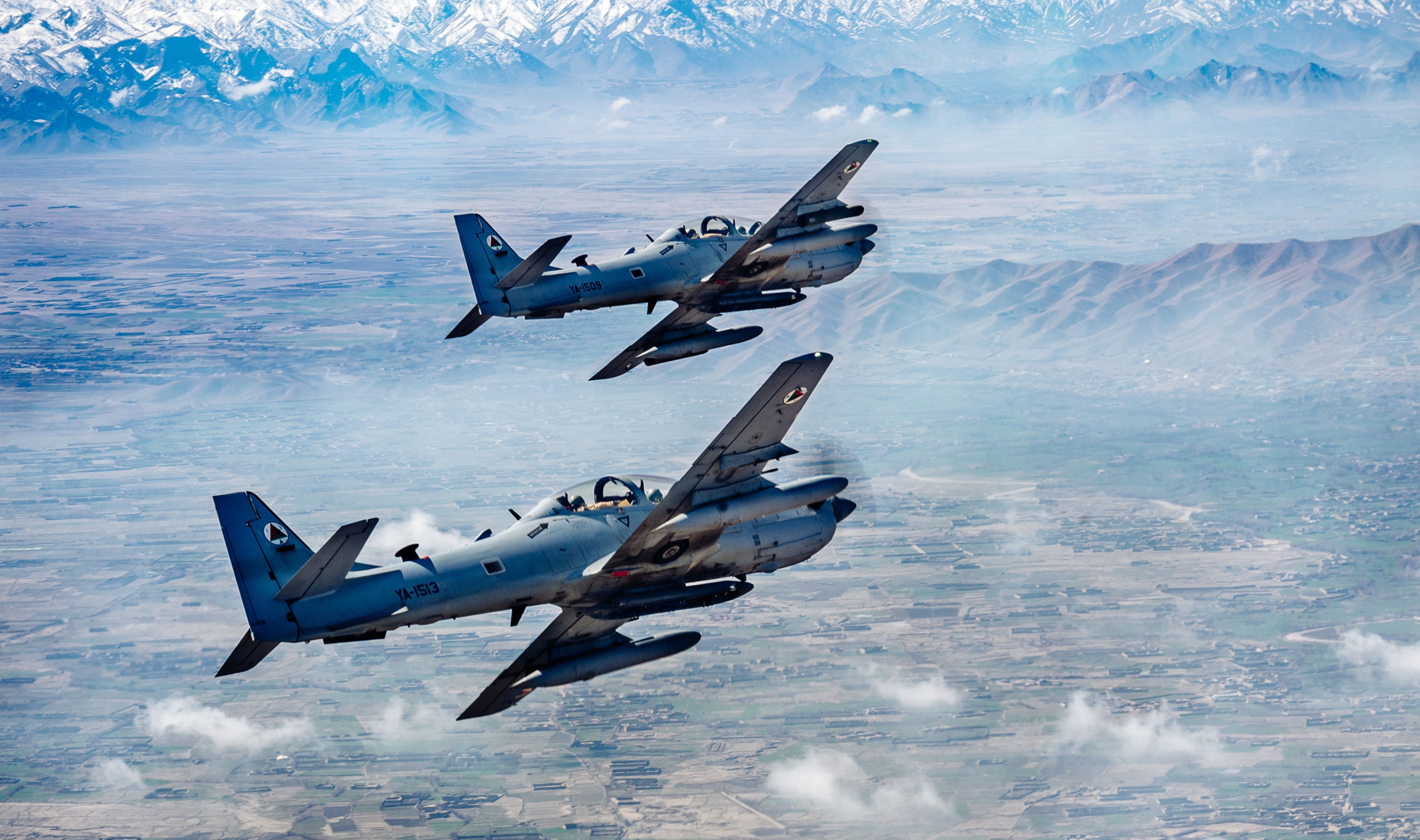
In an era dominated by stealth jets and high-end airpower, a propeller-driven aircraft might seem out of place. Yet across conflict zones, from dense jungles to arid deserts, the A-29 Super Tucano continues to prove its worth.
Built for persistence rather than speed, it fills a critical gap between helicopters and fighter jets.
Read on to learn how the Super Tucano became one of the most widely adopted light attack and training aircraft.
At a Glance
| Category: | Details: |
| Type | Light attack aircraft / turboprop trainer |
| Role | Counterinsurgency, light attack, ISR, advanced pilot training |
| Manufacturer | Embraer |
| Country of Origin | Brazil |
| Crew | 1–2 (pilot and instructor/mission operator) |
| Length | 11.4 meters (37.4 feet) |
| Wingspan | 11.1 meters (36.4 feet) |
| Height | 3.9 meters (12.8 feet) |
| Maximum Takeoff Weight | 5,400 kilograms (11,904 pounds) |
| Engine | Pratt & Whitney Canada PT6A turboprop |
| Speed | 590 kilometers/367 miles per hour |
| Operational Range | 1,300 kilometers (808 miles) |
| Service Ceiling | 10,668 meters (35,000 feet) |
| Internal Weapons | 2 x 12.7mm machine guns |
| Sensor Capability | Electro-optical/infrared targeting support |
| Compatible Weapons | Rockets, guided bombs, air-to-air missiles, gun pods |
What Is the Super Tucano?
The A-29 Super Tucano is a turboprop light-attack, reconnaissance, and advanced-trainer aircraft developed by Brazilian firm Embraer.
It is designed for close air support, counterinsurgency, border surveillance and patrol, and pilot training, as well as emerging roles such as counter-drone operations.
Unlike high-performance jets, the Super Tucano emphasizes low operating cost, long endurance, and rugged deployment, making it especially effective in asymmetric warfare environments.
Origins and Development
The Super Tucano traces its roots to the earlier EMB-312 Tucano, a basic trainer aircraft introduced in the 1980s.
By the 1990s, demand grew for a platform that could combine training and combat roles in low-intensity conflicts. Embraer launched the ALX (Light Attack Aircraft) program, leading to the A-29’s development.
Key milestones:
- 1999: Program launch
- 2003: Entry into service with the Brazilian Air Force
- 2010s: Expanded exports to over a dozen countries
- 2020s: Continued upgrades and NATO-aligned production (via US assembly lines)
The concept was simple: deliver precision capability at a fraction of the cost of a jet, without sacrificing mission effectiveness.
Variants of the Super Tucano
A-29A (Single-Seat)
Primarily used for combat missions, offering full operational capability with a single pilot.
A-29B (Two-Seat)
The most common variant, combining:
- Training
- Light attack operations
It allows transition from training to combat within the same platform.
Super Tucano Design and Capabilities
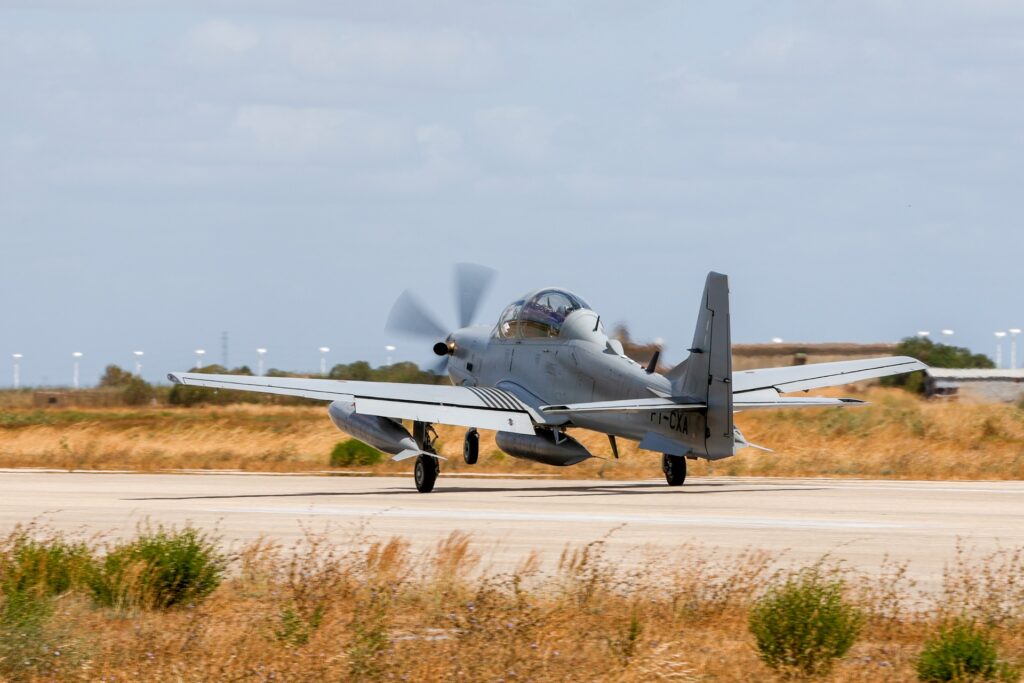
The Super Tucano blends modern avionics with a rugged turboprop design, enabling operations in austere environments.
Key Features
- Pratt & Whitney PT6A turboprop engine
- Glass cockpit with head-up display and HOTAS controls
- Electro-optical/infrared sensors
- Five external hardpoints for weapons
- Armored cockpit and self-sealing fuel tanks
Strengths
- Low operating cost compared to jet aircraft
- Long loiter time (over 6 hours in some configurations)
- Ability to operate from unprepared or short runways
- Highly effective in counterinsurgency and surveillance roles
- Compatible with precision-guided munitions
Limitations
- Lower speed and survivability in high-threat environments
- Limited effectiveness against advanced air defenses
- Payload capacity smaller than dedicated fighter aircraft
Global Use and Combat Experience
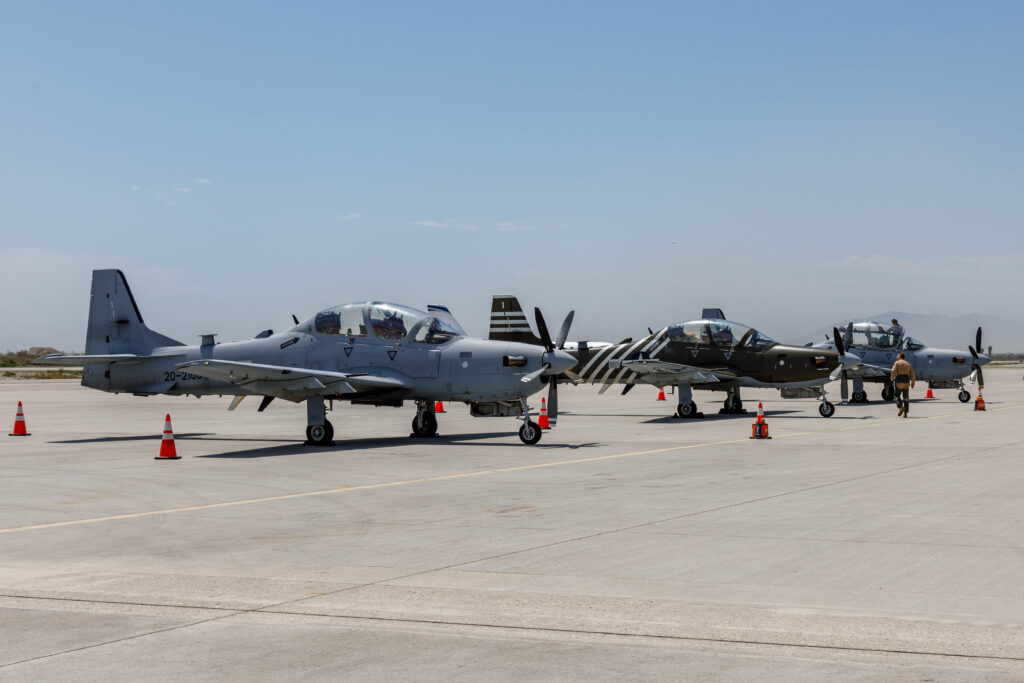
The Super Tucano is operated by more than 15 air forces worldwide, reflecting its versatility and affordability.
Operational Use
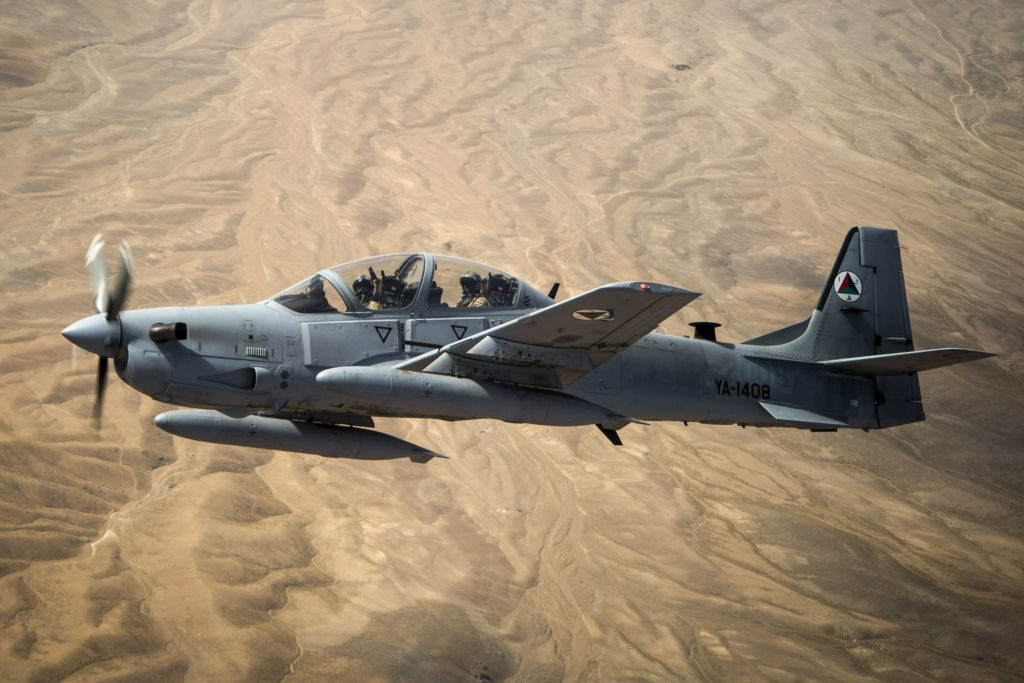
- Afghanistan: Used by the Afghan Air Force for close air support
- Colombia: Extensively deployed in counterinsurgency missions
- Philippines: Employed during the Battle of Marawi
- Africa: Widely used for surveillance and anti-insurgent operations
- Uruguay: Used to renew its fleet and modernize operational capabilities
- Nigeria: Used for ground support, surveillance, and airstrike capabilities against insurgents
Deployment Roles
- Close air support for ground forces
- Intelligence, surveillance, and reconnaissance (ISR)
- Border security and anti-smuggling operations
- Pilot training with combat readiness
Its ability to operate cheaply and continuously has made it particularly valuable in prolonged conflicts.
Future Outlook
As airpower evolves, not every mission requires a high-end fighter or a drone. For many air forces, the challenge is persistence, affordability, and flexibility.
That’s where the Super Tucano stands out: offering a practical, combat-proven solution for missions where advanced jets are unnecessary, but air support is essential.