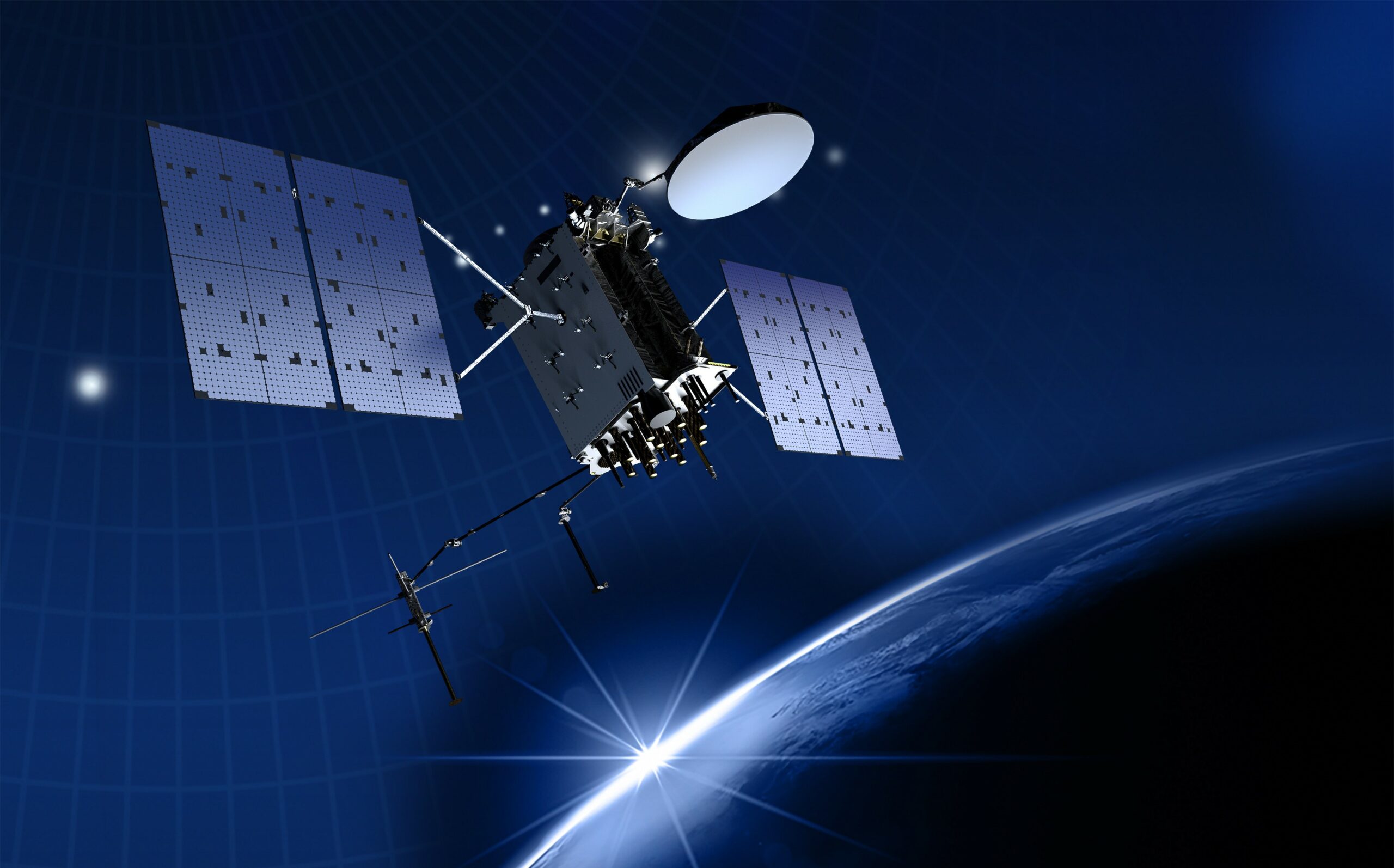

The US Space Force has awarded Boeing a $2-billion contract to develop two additional Mobile User Objective System (MUOS) satellites.
Under the contract, Boeing will design, manufacture, integrate, and support the on-orbit testing of the sixth and seventh MUOS satellites.
The award concludes the second phase of the MUOS Service Life Extension program, which aims to replace aging spacecraft and prevent future gaps in global military communications.
Scheduled for launch no earlier than 2031 and 2032, the satellites are expected to keep the MUOS constellation operational through at least 2035.
MUOS provides secure ultra-high frequency satellite communications for mobile and fixed military users worldwide, supporting voice and data links for forces operating on land, at sea, and in the air.
The additional satellites will preserve the network’s Wideband Code Division Multiple Access capability, ensuring compatibility with existing and planned military radio systems used by US and allied forces.
Latest Programs
The contract follows several recent US Space Force programs aimed at strengthening secure and resilient military satellite communications.
Earlier this month, the service awarded Northrop Grumman a $398-million contract to develop an Enhanced Protected Tactical Satellite Communications prototype.
The system, based on the company’s GEOStar-3 satellite bus, will integrate an anti-jam communications payload and Protected Tactical Waveform processor to improve communications resilience against electronic warfare threats.
In May, the US Space Force selected Viasat and Intelsat General Communications for a combined $437.7 million-contract under the Protected Tactical Satellite-Global program.
The effort will procure maneuverable geosynchronous satellites designed to provide jam-resistant communications for military forces operating in contested environments.
Earlier this year, the service also awarded contracts worth up to $3.2 billion to 12 companies under the Space-Based Interceptor program.
The initiative will fund the development of prototype space-based missile defense technologies, with an initial demonstration planned for 2028.