
The US Defense Innovation Unit (DIU) has chosen Mach Industries to serve as the aircraft integrator for the Runway Independent Maritime Expeditionary Strike (RIMES) program and lead its development and overall execution.
It comes after the US Navy released a solicitation in February for a maritime drone that can launch and recover with minimal infrastructure, conduct long-range strikes, and be ready for significant physical prototyping within 12 months of an award.
The California-based company will partner with Whisper Aero, an aerospace startup headquartered in Tennessee, to design and deliver the Atlas next-generation aircraft for the program.
“Mach’s speed to prototype and production, coupled with Whisper Aero’s novel aerodynamics and propulsion makes Atlas a revolutionary air mobility platform,” said Nathan Diller, President and Chief Strategy Officer at Mach Industries.
Atlas for RIMES
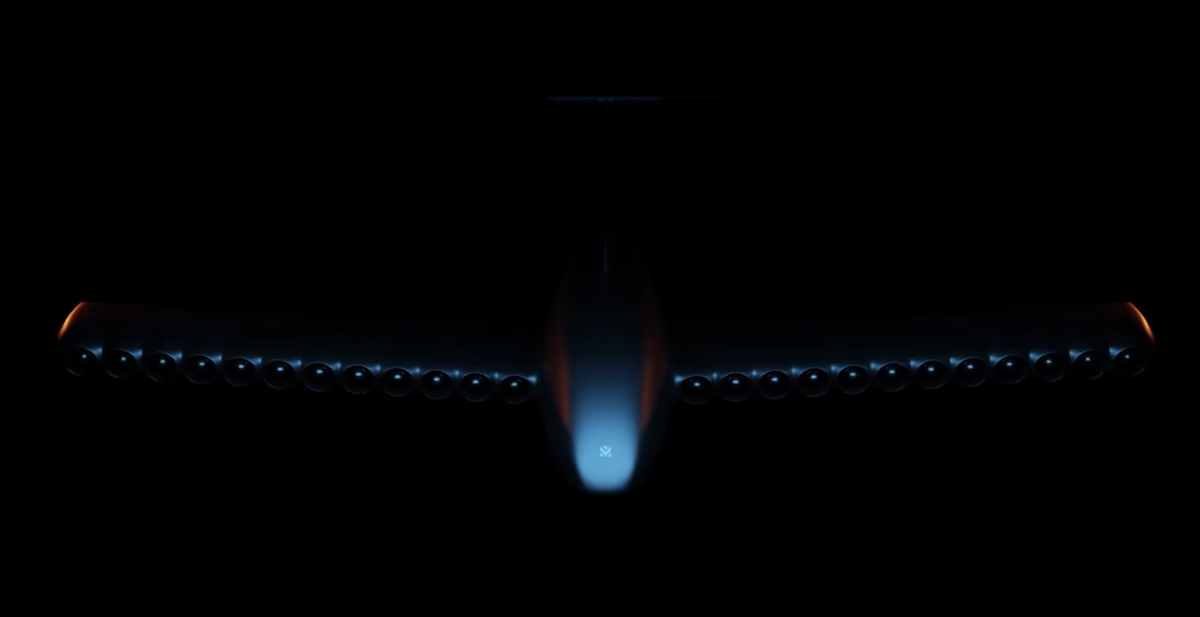
Mach Industries is developing the Atlas drone to fly at increased ranges, operate with a significantly reduced acoustic signature, and be mass-produced at low cost.
It is also being made with a “radically reduced part count and highly redundant propulsion architecture” to simplify sustainment while maintaining safe operations.
Powered by a hybrid-electric propulsion system, Atlas meets the RIMES program requirements for a runway-independent drone that can carry a 1,000-pound (454-kilogram) payload while operating at a range of 1,400 nautical miles (1,611 miles/2,593 kilometers).
It integrates Whisper Aero’s JetFoil, a propulsion system that enables conventional, short, and vertical-takeoff-and-landing aircraft to operate silently and efficiently.
JetFoil is designed to generate a lift coefficient of 40 even at low speeds such as 15 knots (17 mph/28 km/h), according to its manufacturer.
These features enable the drone to operate from unimproved landing zones like a rotary-winged craft, maintain control like a fixed-wing platform, and require less than half the thrust-to-weight ratio needed for vertical flight.