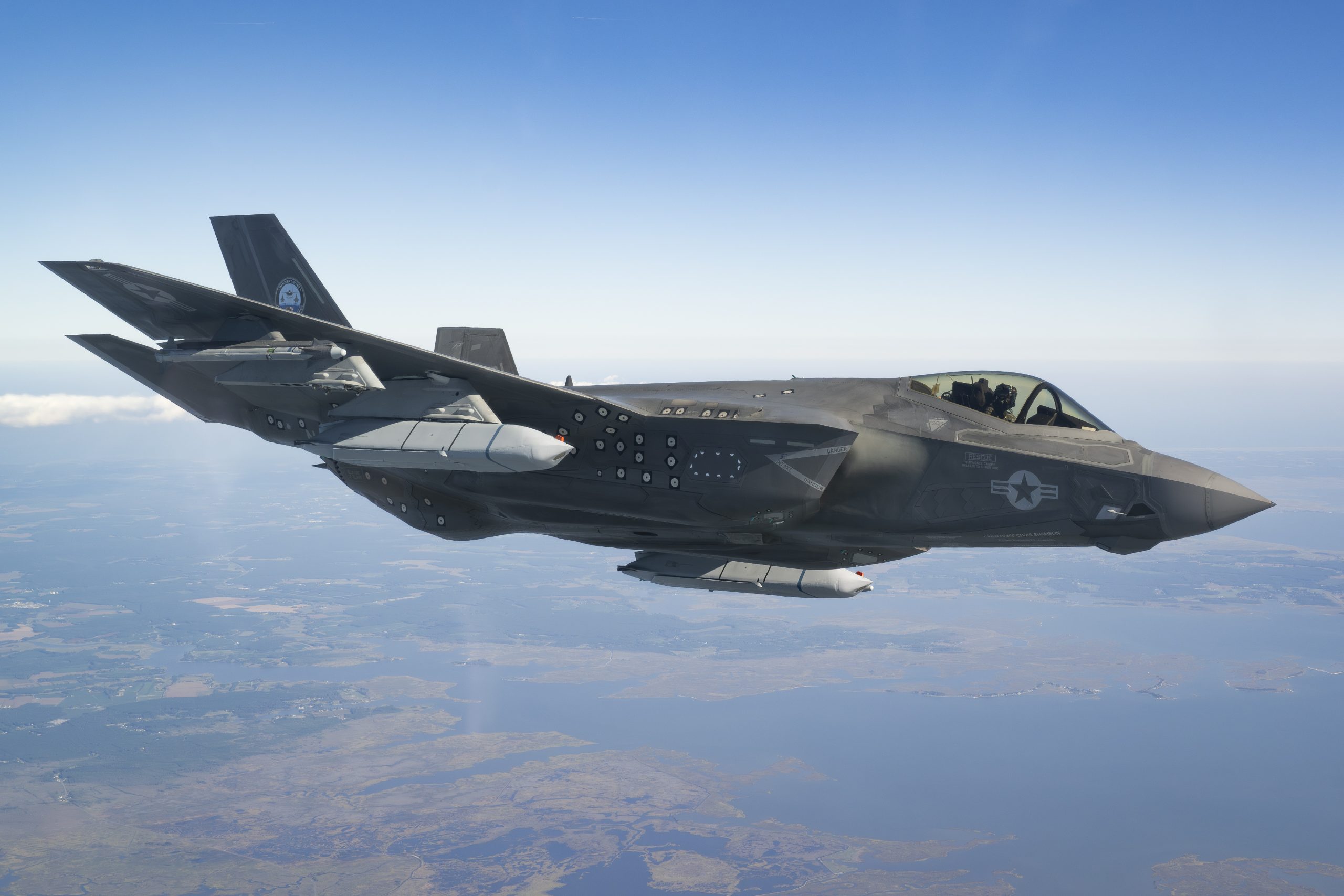

The US Navy has completed the first phase of the F-35C Long-Range Anti-Ship Missile (LRASM) flight sciences test program, advancing efforts to equip the stealth fighter with a long-range maritime strike capability.
Featuring advanced sensors, autonomous targeting capabilities, and low-observable characteristics, the Lockheed Martin missile is a key component of the US military’s Indo-Pacific strategy, designed to hold high-value maritime targets at risk in contested environments.
As part of the two-year test phase, the LRASM underwent a series of integration flight tests to evaluate the aircraft’s handling characteristics while carrying the weapon externally across its flight envelope.
Having completed captive-carry testing, the program is expected to move into separation trials to assess safe weapon release, followed by guided weapon tests to evaluate the missile’s performance across the full engagement chain and, ultimately, a live-fire campaign.
No details have been disclosed regarding the timeline for achieving initial operational capability.
“By integrating LRASM onto the F-35, we’re giving our warfighters a powerful capability that enhances mission flexibility and expands their operational options,” Vice President and General Manager at Lockheed Martin Air Dominance and Strike Weapons Jon Hill said.
Vice President of F-35 Development Sean Jackson added: “Integrating LRASM onto the proven 5th Generation F-35 is another example of how Lockheed Martin is enhancing the operational capabilities of the F-35, alongside investments from the US military and its allied partners.”
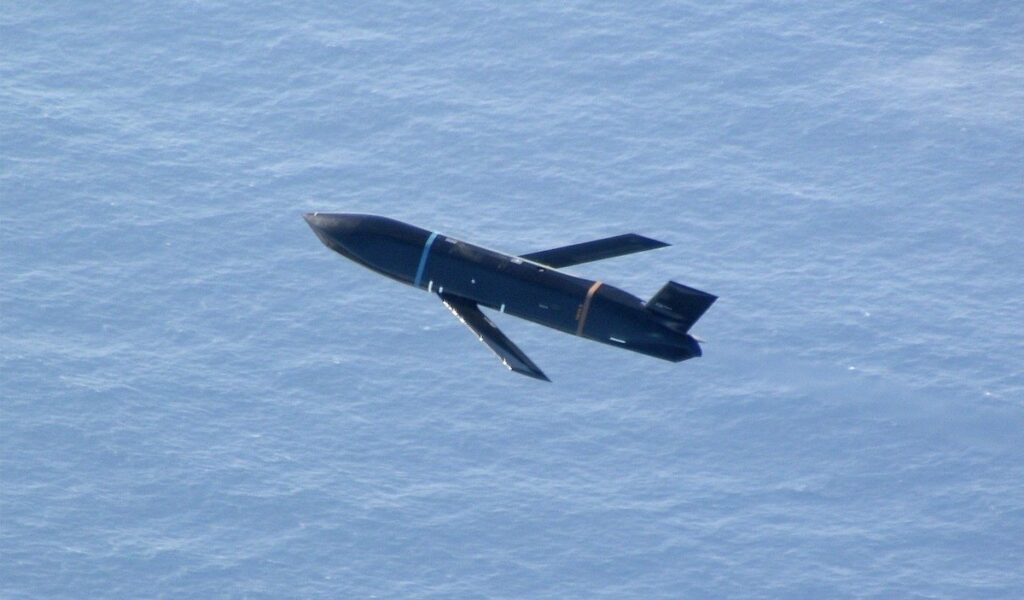
Built to Penetrate A2/AD Defenses
The AGM-158C LRASM is a long-range, air-launched anti-ship missile developed by the Defense Advanced Research Projects Agency and US Navy to address shortcomings in the aging AGM-84 Harpoon, particularly in range and survivability.
Derived from the AGM-158 Joint Air-to-Surface Standoff Missile Extended Range, LRASM uses onboard sensors and targeting systems to independently locate and engage targets without relying on GPS, data links, or precise pre-launch intelligence, enabling it to strike moving ships in highly contested environments.
The missile features a multi-mode passive radio-frequency seeker, a weapon datalink, and a new altimeter. It can be cued by targeting data from its launch platform, receive in-flight updates via datalink, or rely on onboard sensors to autonomously detect, identify, and engage enemy vessels.
With a range exceeding 200 nautical miles (230 miles/370 kilometers), LRASM provides a standoff strike capability against high-value naval targets while helping preserve aircraft survivability.
F-35 Integration
LRASM is already operational on the US Navy’s F/A-18E/F Super Hornet and the US Air Force’s B-1B Lancer. Integration with the F-35C Lightning II will allow the US Navy to leverage the stealth fighter’s advanced sensor suite to detect, classify, and track maritime targets while remaining difficult to detect.
Compared with a non-stealth platform such as the F/A-18, the F-35 can operate closer to contested areas, gather targeting data earlier, and remain on station longer before being detected.
Combined with the LRASM’s autonomous targeting and long-range strike capabilities, these attributes could significantly enhance the US Navy’s ability to engage high-value maritime targets within heavily defended environments.