
The United States has a naval shipbuilding problem, and more money will not fix it. Even when Congress increases funding, ships do not appear faster.
American yards face labor shortages, aging facilities, limited dry dock capacity, and chronic delivery delays. The technology remains world-class. The industrial base behind it does not.
Washington knows this. The ongoing debate over the “Golden Fleet” — a concept combining advanced warships, lower-cost vessels, unmanned systems, and a broader maritime industrial revival — is ultimately a debate about whether the United States can regenerate sea power at the speed that great-power competition demands.
The honest answer is not yet.
South Korea can help close that gap. Not by building America’s warships, but by reinforcing the industrial ecosystem that sustains them.

MRO Is Where to Start
The most practical entry point is maintenance, repair, and overhaul. The US Navy’s readiness problem is not only about hull count but also about availability.
When ships operating in the Indo-Pacific must return to the continental United States for routine maintenance, deterrence suffers.
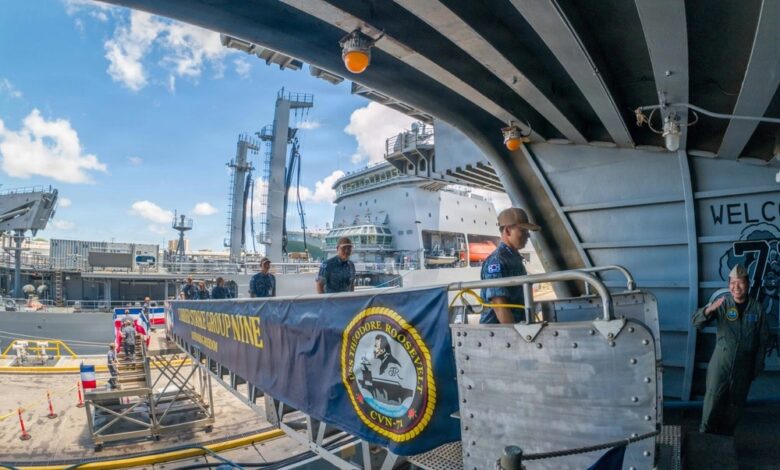
South Korean shipyards can serve as forward MRO hubs for US logistics vessels, support ships, and, where security conditions permit, more complex platforms.
This would relieve pressure on American yards rather than compete with them. US facilities stay focused on new construction, nuclear-powered vessels, and the most sensitive combatants. Korean yards help sustain deployed forces closer to the theater.
Washington should frame this as forward sustainment. Seoul should recognize it as a direct contribution to allied deterrence.
Golden Fleet Needs Logistics Backbone
Any serious version of the Golden Fleet concept must reckon with what warships actually require to fight: fuel, ammunition, transport, replenishment, repair. Auxiliary and logistics vessels are strategically essential in a prolonged Indo-Pacific contingency, even if they rarely appear in force structure debates.
Korean firms are well-positioned to support production of sealift platforms, replenishment vessels, and commercial-standard support ships. These are less politically sensitive than nuclear submarines or Aegis destroyers, but they are indispensable to fleet endurance.
Filling this gap would let the United States concentrate domestic capacity on its most sensitive programs while expanding overall maritime output.
Investment Inside US Changes Politics
The obvious objection to Korean shipbuilding cooperation is jobs. If Korean firms build ships only in Korea, the arrangement is politically indefensible in Washington regardless of its strategic logic.
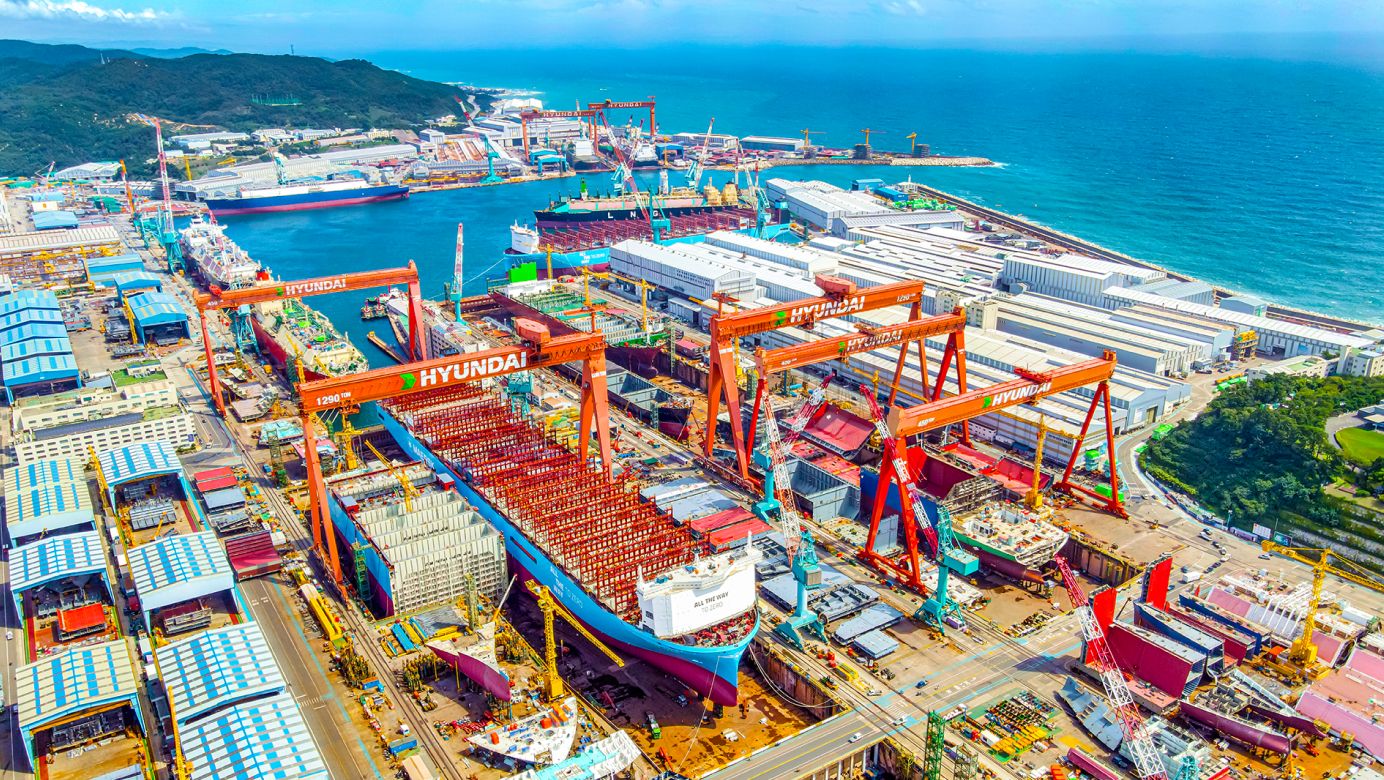
The answer is investment, not just contracts. Hanwha’s stake in Philly Shipyard points to the viable model: Korean capital and production expertise brought inside the American industrial base.
Korean companies investing in US yards, training American workers, modernizing facilities, and introducing better production methods creates US jobs and reduces political resistance.
The strategic message should be clear: Korean shipbuilders can help America rebuild its own shipbuilding base, not by substituting for US yards, but by reinforcing them from within.
What Cooperation Should Actually Look Like
Seoul and Washington should move past memoranda of understanding and into specific pilot projects: shipyard modernization, workforce training, modular construction, digital production systems, supply-chain coordination, joint work on support vessels.
Korean shipbuilders cannot reform US acquisition processes, but they can demonstrate what production discipline looks like when applied to complex vessels at scale.
Sensitive combat systems, nuclear propulsion, and advanced electronics will require strict controls, and US law will continue to limit foreign participation in the most classified programs.
The ceiling is real. But the floor — what is practical, legal, and mutually beneficial right now — is higher than either government has been willing to act on.
Test of Alliance Transformation
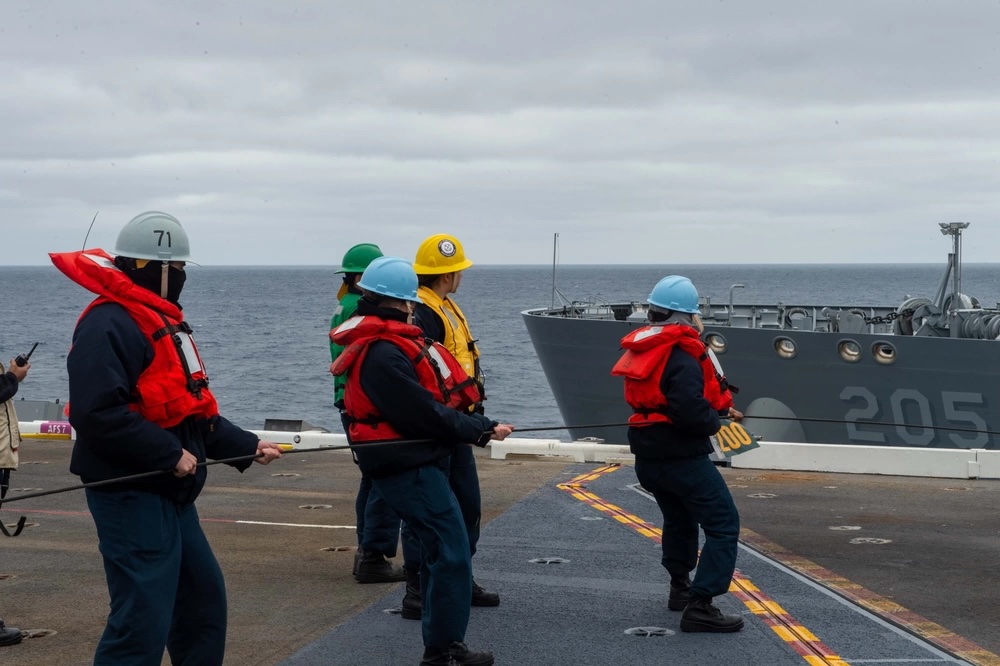
The best model is a tiered division of labor. South Korea should begin with MRO and support vessels, expand into US-based investment and co-production, contribute to logistics and auxiliary shipbuilding, and selectively support more sensitive programs through components, production methods, and design cooperation rather than full foreign construction.
For Seoul, this agenda would show that the US-ROK alliance is evolving beyond the defense of the Korean Peninsula.
South Korea would not merely be a consumer of American security. It would become a provider of allied maritime capacity. For Washington, Korean participation would add speed, resilience, and industrial depth to a naval rebuilding effort that cannot succeed through protectionism alone.
South Korea cannot build America’s Navy for it. But it can help ensure that US naval power has the industrial depth to endure.

Jihoon Yu is the director of external cooperation and associate research fellow at the Korea Institute for Defense Analyses.
Jihoon was a member of the Task Force for South Korea’s light aircraft carrier project and the Jangbogo-III submarine project.
He is the main author of the ROK Navy’s Navy Vision 2045.
His area of expertise includes the ROK-US alliance, the ROK-Europe security cooperation, inter-Korean relations, national security, maritime security, hybrid threats, and strategic weapons systems.
He earned his MA in National Security Affairs from the US Naval Postgraduate School and Ph.D. in Political Science from Syracuse University.
The views and opinions expressed here are those of the author and do not necessarily reflect the editorial position of The Defense Post.
The Defense Post aims to publish a wide range of high-quality opinion and analysis from a diverse array of people – do you want to send us yours? Click here to submit an op-ed.