
Airbus Helicopters and Quantum Systems have partnered to integrate the latter’s counter-drone capability into Airbus military helicopters.
Further details about the capability were not disclosed. However, the initiative will begin with the multi-role H145M.
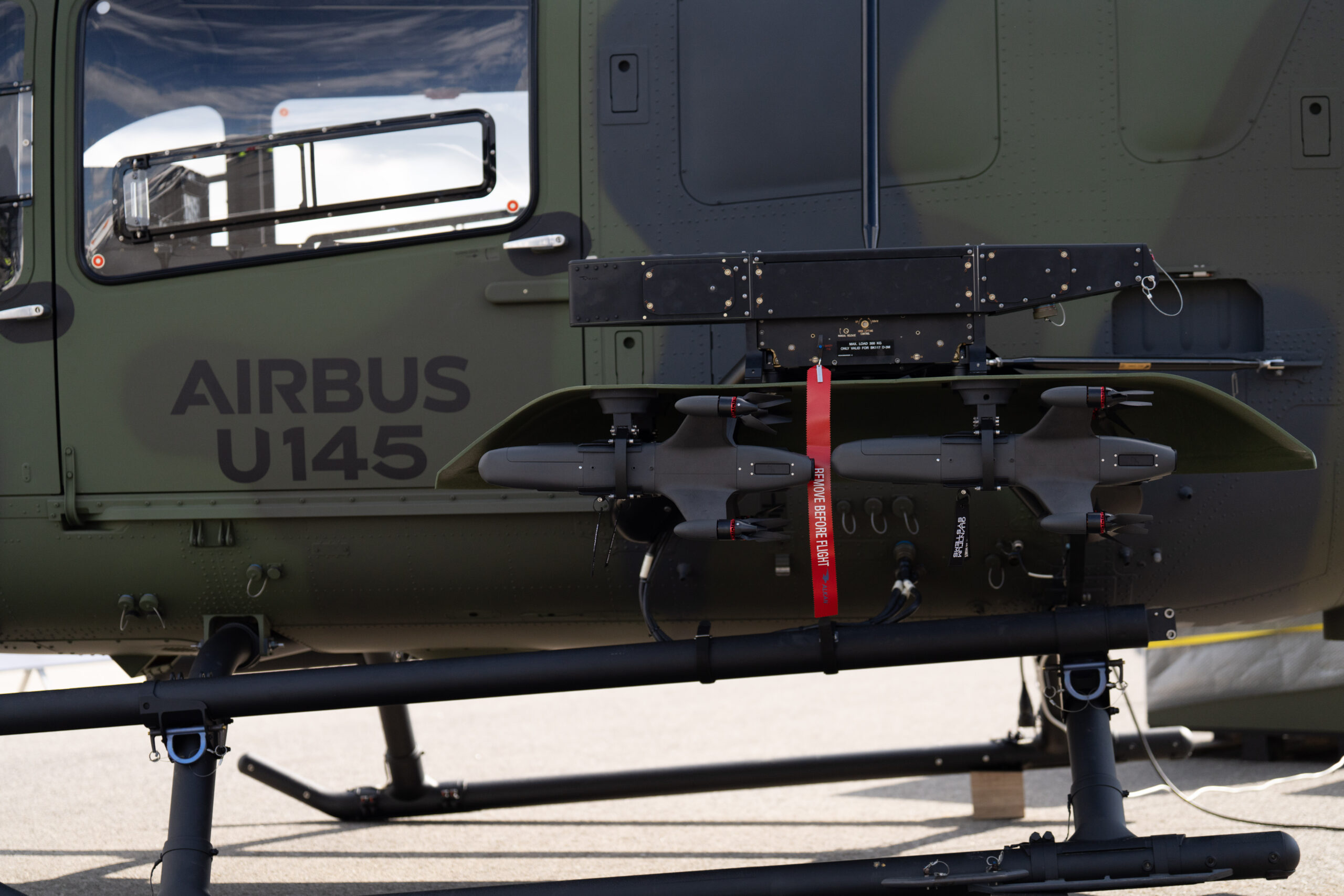
A mock-up of an unmanned H145M displayed at ILA Berlin 2026 featured two interceptor drones mounted on its weapon stations, offering a glimpse of the future capability.
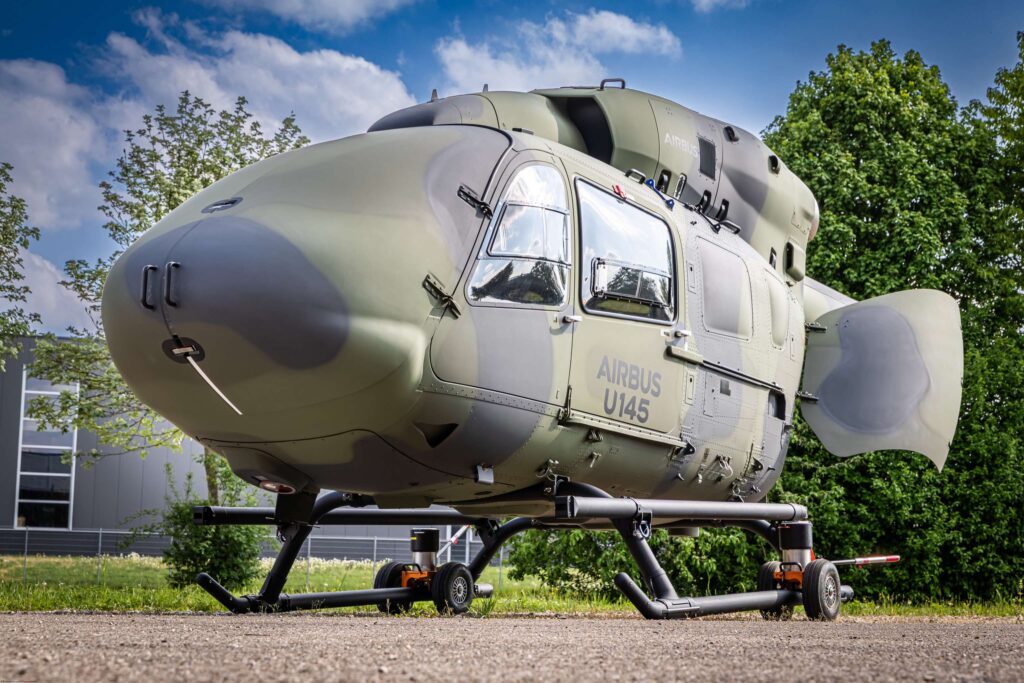
The unmanned variant, designated U145, has a maximum takeoff weight of 3,800 kilograms (8,378 pounds), a range of approximately 650 kilometers (404 miles), and endurance of up to 3 hours and 34 minutes.
Its modular architecture enables missions including disaster response, firefighting, reconnaissance, surveillance, and air-launched drone operations.
Airbus is also working with MBDA to integrate crewed-uncrewed teaming capabilities into the platform.
“This agreement with Quantum Systems marks a crucial step forward in further expanding the operational spectrum of our military helicopters, ensuring that crews can effectively control the airspace against uncrewed threats,” Airbus Helicopters Executive Vice President of Programs Stefan Thomé said.
“The H145M, with its advanced open system architecture and exceptional growth potential, serves as the ideal launching pad for this joint initiative. By combining our broad military helicopter portfolio with innovative C-UAS solutions, we are protecting personnel and assets as well as reinforcing European technological sovereignty and defence capabilities.”
Quantum Systems Counter-Drone Aircraft
Separately, Quantum Systems unveiled its optionally manned medium-altitude, long-endurance aircraft, the PULSE P19, which features integrated counter-unmanned aerial system (C-UAS) capabilities.
Similar to the H145M concept, the PULSE P19 features drone interceptors mounted on external hardpoints.
Although the aircraft is designed to support a wide range of missions, its C-UAS capability is expected to be a key feature in the current threat environment.
“One of the key capabilities of PULSE P19 is the detection, tracking, and defeat of asymmetric airborne threats in low-altitude airspace,” the German drone specialist explained.
“Using onboard radar and high-power EO/IR systems, the aircraft can actively and passively detect and track fast-moving, long-range strike drones.
“Integrated through MOSAIC UXS, the complete intercept workflow — from detection to effector release and engagement execution — can be controlled either by the pilot or through remotely controlled aircraft operations.”