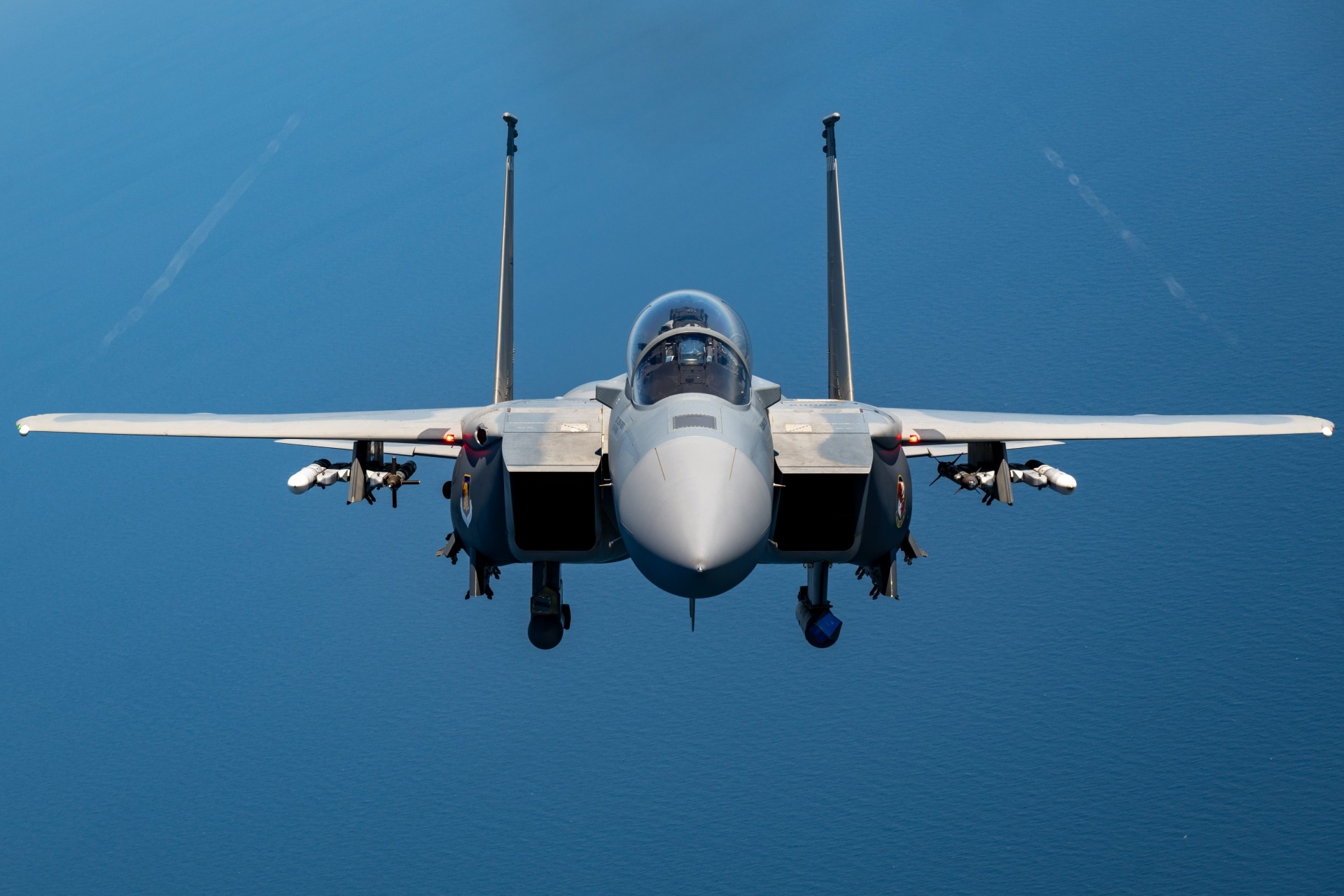
Some aircraft fade with time, others are continually adapted to stay relevant. The F-15EX Eagle II falls into the latter category, evolving from a Cold War-era design into a modernized platform.
Rather than emphasizing stealth, it reflects a different design philosophy, prioritizing payload capacity, speed, and integration within wider force structures to remain effective in contested environments.
Here’s how the F-15EX fits into the current airpower landscape, and what its development signals about the continued role of upgraded legacy platforms in modern air combat.
What Is the F-15EX?
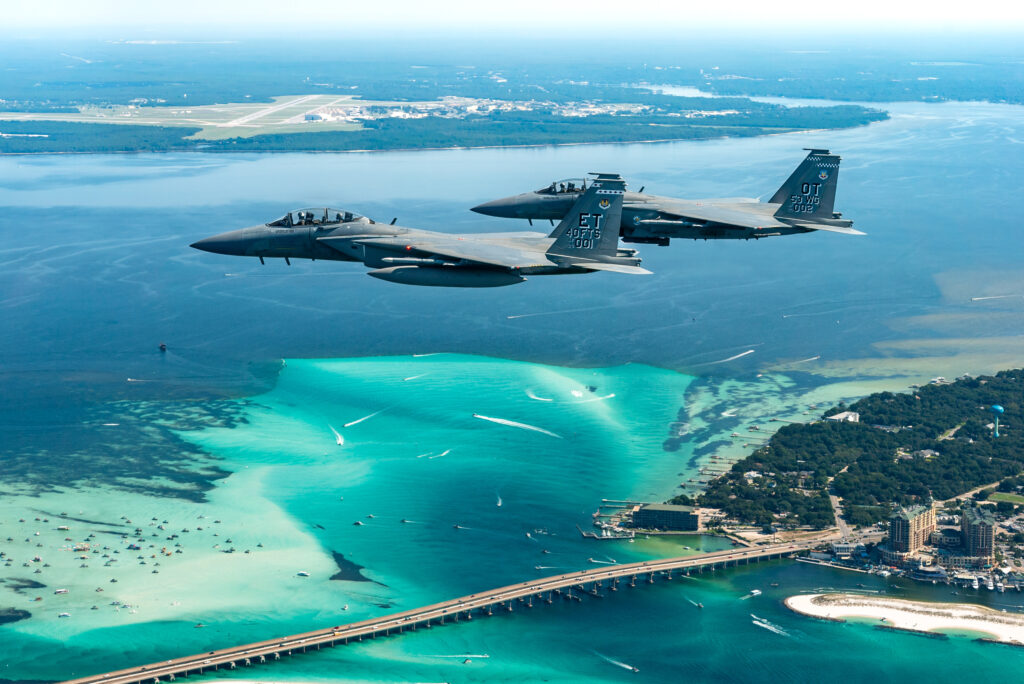
The F-15EX Eagle II is an advanced multirole fighter developed for the US Air Force.
It is the latest evolution of the F-15 family, designed to replace aging F-15C/D aircraft while complementing fifth-generation fighters like the F-35 Lightning II.
Unlike stealth-focused platforms, the F-15EX emphasizes payload capacity, speed, and advanced digital systems, positioning it for missions that require heavy weapons loads and long-range strike capability.
From Air Superiority to Digital Backbone
The F-15EX traces its lineage to the original F-15 Eagle, first introduced in the 1970s.
Developed by Boeing, the EX variant builds on decades of upgrades while introducing a fully digital architecture.
It incorporates lessons from export variants like the F-15SA (Saudi Arabia) and F-15QA (Qatar), combining proven airframe performance with modern avionics, sensors, and open mission systems.
This allows rapid integration of new weapons and technologies, an essential feature in today’s fast-evolving threat environment.
Built for Capacity and Flexibility
Where stealth fighters trade payload for low observability, the F-15EX is suited to roles that demand high payload capacity and extended reach.
- Air superiority: Long-range air-to-air engagements with large missile loads.
- Strike missions: Precision attacks using a wide range of guided munitions.
- Homeland defense: Rapid response and interception roles.
- Networked warfare: Acting as a “missile truck” supporting stealth aircraft.
Its ability to carry a large and diverse weapons load also contributes to mission flexibility in mixed-aircraft operations.
Under the Hood
Key Features
The F-15EX integrates advanced avionics, including the AN/APG-82 AESA radar, which provides enhanced detection and tracking capabilities.
Its open mission systems architecture allows rapid software updates and integration of emerging technologies.
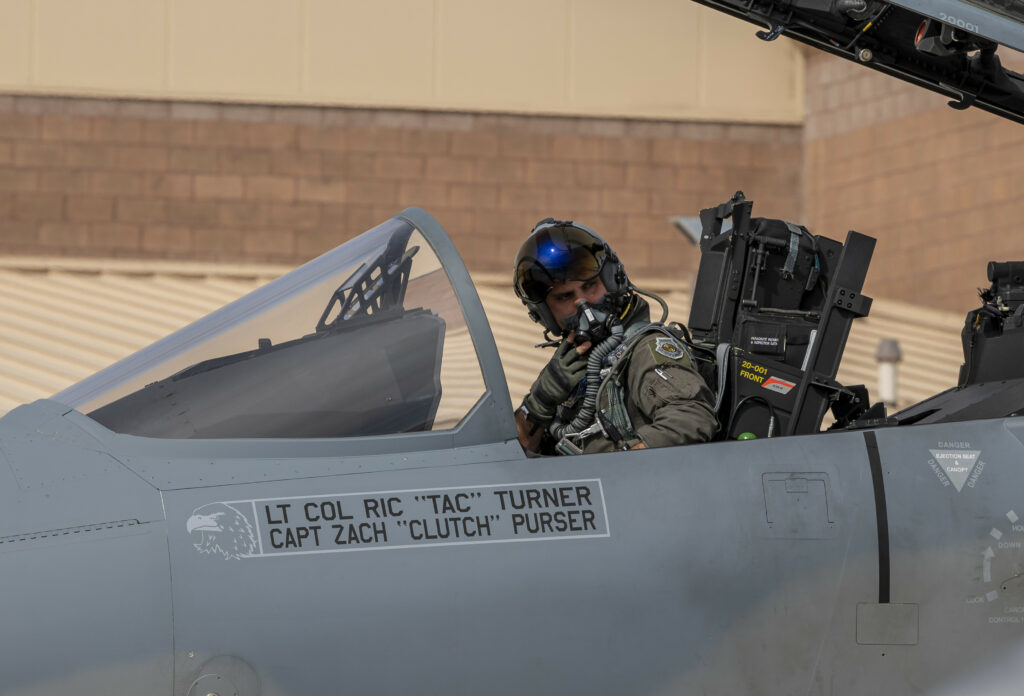
The aircraft also features modern electronic warfare systems, a redesigned cockpit with large-area displays, and upgraded flight control computers for improved pilot awareness.
Strengths
The defining advantage of the F-15EX Eagle II is its payload capacity, with a maximum external load of around 29,500 pounds (13,400 kilograms) — one of the highest of any modern fighters.
Combined with high speed and long range, this makes it ideal for both air dominance and strike missions.
Its digital backbone ensures future adaptability, and its use of an existing airframe reduces development risk and cost.
Limitations
The F-15EX lacks the stealth characteristics of fifth-generation fighters, making it more detectable in contested environments.
While it can operate effectively with support from stealth aircraft and electronic warfare assets, it may face a higher risk in heavily defended airspace.
Its size and visibility also make it less suited for missions requiring low observability.
Operational Role and Global Context
The F-15EX is being introduced primarily by the US Air Force, with potential interest from international partners already operating F-15 variants.
It is expected to play a critical role in integrated air operations, working alongside stealth platforms, drones, and networked systems.
In this role, the aircraft can carry large numbers of missiles or stand-off weapons, enabling it to support other assets while remaining outside the most dangerous threat zones.
The Road Ahead
The F-15EX reflects a broader shift in airpower design. Its open-architecture framework is intended to accommodate emerging capabilities, including advanced sensors, next-generation munitions, and collaborative combat technologies.
As air forces adjust to more distributed and technology-driven threats, the Eagle II illustrates how legacy airframes can be extended into new operational roles without fully departing from their original design lineage.