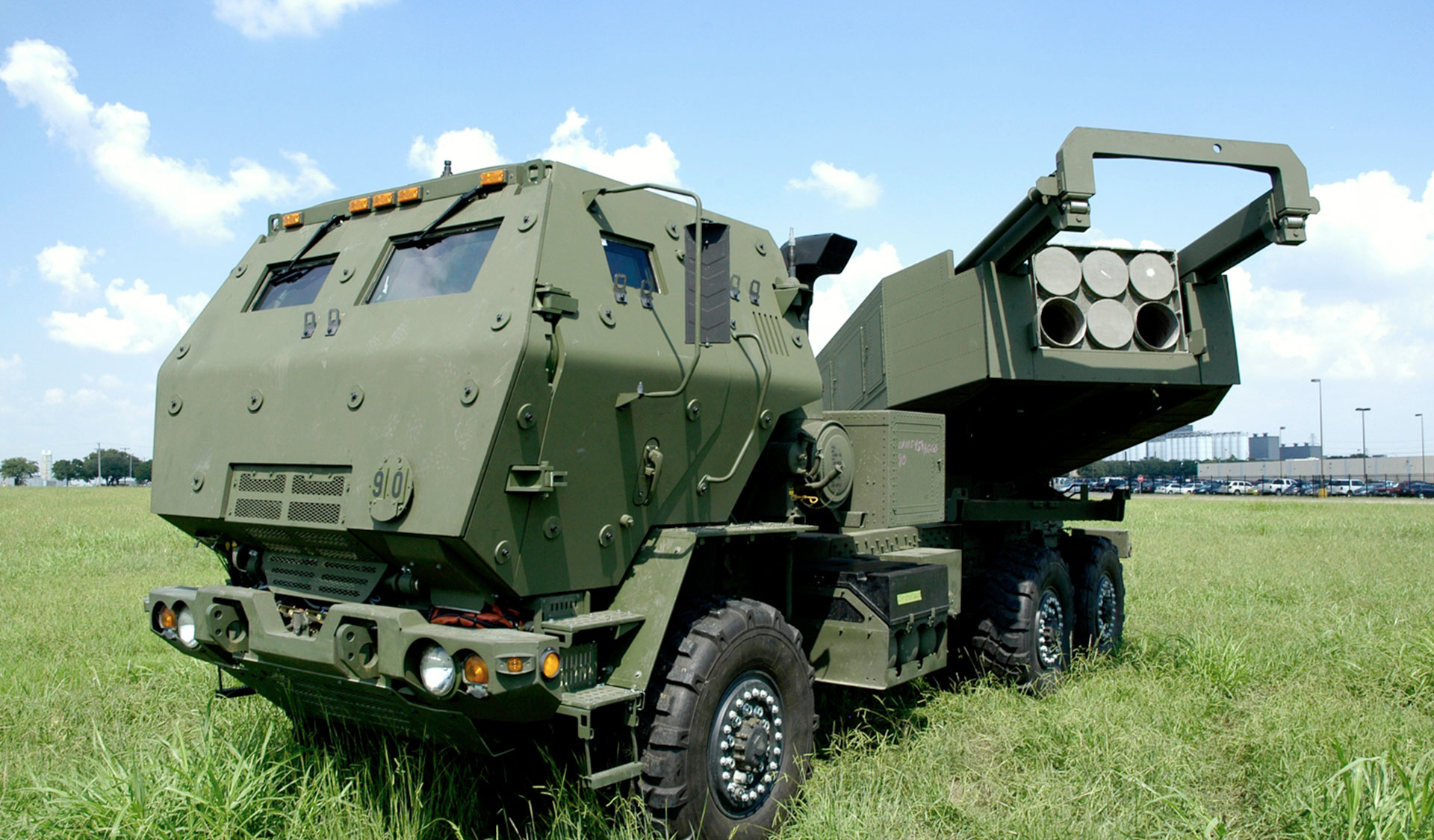

Canada has struck a 2.6-billion Canadian dollar ($1.88-billion) deal with the US to procure 26 M142 High Mobility Artillery Rocket System (HIMARS) launchers for the Canadian Army.
Finalized under the US foreign military sales program, the government-to-government agreement includes an initial stock of munitions, spare parts, training, and support services, with deliveries expected to begin in 2029.
The deal comes after the US Department of State approved the purchase in October 2025.
A $1.13-billion contract was subsequently awarded to Lockheed Martin in April for the full-rate production of HIMARS launchers for the US Army and the US Marine Corps, as well as Australia, Canada, Estonia, Sweden, and Taiwan via foreign military sales.
“Canada’s Armed Forces must have the capabilities required to meet today’s threats and tomorrow’s challenges,” Canada’s Minister of National Defence David J. McGuinty said.
“The long-range missile capability is a critical step in supporting our military so it remains ready and equipped to protect Canadians and support our allies and partners when needed.”
Long-Range Precision Strike Capability
HIMARS was selected under the Long-Range Precision Strike (Land) project. According to Canada’s Ministry of National Defence, the system will be capable of striking targets more than 300 kilometers (186 miles) away, significantly enhancing the country’s long-range strike capabilities.
The wheeled system employs the Multiple Launch Rocket System family of munitions, which can strike targets from 84 kilometers (52 miles) to over 500 kilometers (311 miles).
Additionally, it could also be paired with future land-based anti-ship missile capabilities to support the defense of Canada’s coasts, including the Arctic, according to the Canadian government.
“The Long-Range Precision Strike (Land) project will give the Canadian Armed Forces the ability to engage targets at long range and operate more effectively alongside our closest allies, while responding to emerging threats,” Canada’s Minister of Government Transformation, Public Works and Procurement Joël Lightbound explained.
“And through our Industrial and Technological Benefits Policy, we are turning this investment into good-paying Canadian jobs, supporting workers and creating opportunities for industry across the country.”